Article
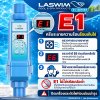
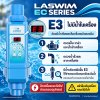
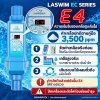
If your Laswim EC Series salt chlorinator displays E4, the salt concentration is too high, but you shouldn't change the water based on the display code alone. This guide explains how to test the actual salt level, a formula for estimating how much water to replace, a quick reference table, and the dilution steps to bring salt back to the normal 3,500 ppm.
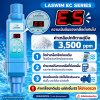
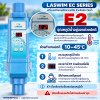
If your Laswim EC Series salt chlorinator displays E5, the salt concentration is too low, but you shouldn't add salt by the bag. This guide explains how to test the actual salt level, the formula for calculating salt by pool volume, a quick reference table, and the manual's steps for adding salt to reach the normal level of 3,500 ppm without overdosing.
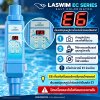
If your Laswim EC Series salt chlorinator displays the E6 code, it indicates a fault in the controller's internal temperature sensor. Have a technician check the sensor before replacing any parts. This guide explains the manual's inspection steps, what to tell the technician if E1 appears at the same time, and how E6 differs from E7.
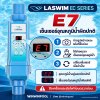
Laswim EC Series showing E7? It indicates a water temperature sensor fault. Have the sensor checked for debris before replacing parts.
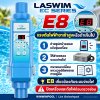
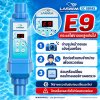
If your Laswim EC Series salt chlorinator displays the E9 code, it indicates excessive output current. The manual recommends contacting your dealer to repair or replace the controller. This guide explains what to do, what information to prepare for the technician, and how E9 differs from the E8 code.
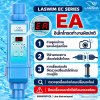
If your Laswim EC Series salt chlorinator displays the EA code, it indicates an electrode fault. The manual says to check the electrode connection first before considering replacement parts. This guide walks through the checks in order, what information to prepare for the technician, and how EA code
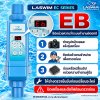
If your Laswim EC Series salt chlorinator displays the EB code, it indicates a system memory chip fault. The manual recommends contacting your dealer to repair or replace the memory chip. This guide explains what to do, what information to prepare for the technician, and how EB differs from the EC code.
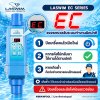
If your Laswim EC Series salt chlorinator displays the EC code, it indicates a fault in the system detection circuit. The manual says to start by switching the unit off and on again. This guide explains what to do next, how to tell whether the code is coming back, and when to contact your dealer to repair or replace the controller.
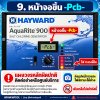
If your Hayward AquaRite 900 displays −Pcb− with the No Flow, Check Salt, High Salt and Inspect Cell lights all on, the manual indicates a main PCB (circuit board) fault, not separate flow and salt problems. This guide explains the 3 steps to take and why you should not add salt to try to clear this code.
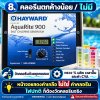
Your Hayward AquaRite 900 shows a normal salt level and the Generating light is on, yet chlorine is low or not detectable. The amount produced may simply not meet your pool's demand. This guide walks through the checks, from AUTO mode, % output and pump time to salt level and cell condition, plus factors that raise chlorine demand such as low CYA and warmer water.
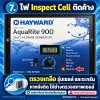
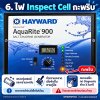
A flashing Inspect Cell light on a Hayward AquaRite 900 is a signal to inspect the cell. It may be time for a scheduled inspection, or the unit has detected reduced cell efficiency, but it does not mean the cell must be replaced. This guide covers 3 checks, including the Turbo Cell setting and scale inspection, and how to reset the warning with the Diagnostic button.
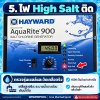
Hayward AquaRite 900 High Salt light on? Check the Turbo Cell setting and test the real salt level before draining. Recommended: 2,700–3,400 ppm.
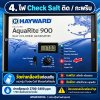
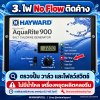
The No Flow light on a Hayward AquaRite 900 means the system cannot detect water flow, and the unit stops producing chlorine. This can be caused by a genuine lack of flow or a flow switch problem. This guide walks you through the checks in order, covering the pump, valves, flow switch cable and installation direction, and explains the difference between a flashing and a steady light.
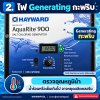
The Generating light on a Hayward AquaRite 900 shows chlorine production status. If it is flashing, the water may be too hot or too cold for the unit's operating range. This guide explains the difference between a steady and flashing light, how to check water temperature with the Diagnostic button and a thermometer, and what to know before using SUPER CHLORINATE mode.
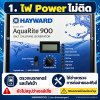
Your Hayward AquaRite 900 is switched on, but the Power light stays off and the display is blank. Don't assume the salt cell has failed. This problem should be checked starting with the power supply. Here's what you can check yourself, including the breaker, power switch and timer, plus the steps a technician should take next.
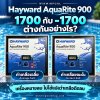
What's the difference between "1700" and "-1700" on a Hayward AquaRite 900 salt chlorinator? The number without a minus sign is the Average Salt reading, while the number with a minus sign is the Instant Salt reading. It does not mean negative salt or reversed cell polarity. This guide explains both readings, the recommended salt range of 2,700–3,400 ppm, and what to check before adding salt or replacing the cell.
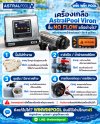
A simple troubleshooting guide for checking an AstralPool Viron salt chlorinator when the system displays a NO FLOW warning.
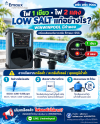
เมื่อเครื่องผลิตคลอรีนจากเกลือ Emaux SSC แสดงไฟ OPERATION 1 สีเขียว และ 2 สีแดง อาจเป็นอาการ **Low Salt หรือเกลือต่ำ** แต่ยังเกิดจาก **ตะกรันสะสมที่เซลล์ หรืออุณหภูมิน้ำต่ำ** ได้เช่นกันครับ

Discover how saltwater pools work, why many families enjoy them, and what you still need to check to keep the water comfortable and safe.

Official announcement confirming WINWINPOOL as the trade name operated exclusively by Win Win Engineering Supply Co., Ltd. Verify the company and bank account details before making payment.
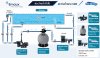
Complete Emaux saltwater swimming pool system for 100m³ skimmer pools featuring the SB20 pump, MFV31 sand filter, and SSC50E salt chlorinator by WinwinPool.
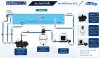
AstralPool filtration system for 60 m³ swimming pools featuring the Victoria Plus Silent pump, Cantabric D600 sand filter, and Viron V35 salt chlorinator by WinwinPool.
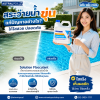
Learn the causes of cloudy pool water and how to restore crystal-clear water using proper water balance, shock chlorination, and pool flocculant.
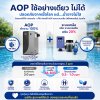
ปลอดภัยจากเชื้อโรค แต่...น้ำอาจไม่ใส
ถ้าอยากได้ทั้ง ปลอดภัย + น้ำใส ต้องใช้ AOP และระบบเกลือ (หรือคลอรีน) ร่วมกันปลอดภัยจากเชื้อโรค แต่...น้ำอาจไม่ใส
ถ้าอยากได้ทั้ง ปลอดภัย + น้ำใส ต้องใช้ AOP และระบบเกลือ (หรือคลอรีน) ร่วมกัน
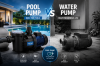
This question may seem simple, but in reality pool pumps and general water pumps are completely different in terms of materials, design, safety standards, and operating methods. If a household water pump is used with a swimming pool, it may create serious risks for both pool users and the pump itself. This article explains every key difference in detail in a clear, practical way that you can apply in real life.
Choosing the wrong size pool pump is the most common problem in pool maintenance. A pump that is too small won't circulate enough water, causing cloudy water. A pump that is too large wastes electricity unnecessarily. This article summarizes everything you need to know — from calculating the pump size to choosing the most cost-effective model for all types of pools, based on over 20 years of experience from the Win Win Pool engineering team.
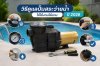
ปั๊มสระว่ายน้ำที่ดีราคา ฿8,000–50,000 ควรมีอายุใช้งาน 7–20 ปี แต่จากประสบการณ์ช่างซ่อมสระ 20 ปี พบว่าปั๊มส่วนใหญ่เสียก่อนกำหนดเพราะ ขาดการดูแลพื้นฐาน ที่ใช้เวลาแค่ 5–10 นาทีต่อสัปดาห์ บทความนี้รวมทุกอย่างที่คุณต้องรู้เพื่อให้ปั๊มทำงานได้เต็มอายุการใช้งาน
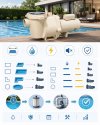
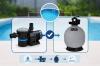
Pumps and sand filters are "partners" that must work together in balance. Choosing a pump that delivers water faster than the filter can handle → water passes through the sand too quickly, unable to filter properly,
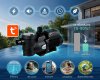
What is a Variable Speed Pump? How does it work?
Comparing SS vs 2-Speed vs VSP in All Dimensions
Calculating Electricity Costs and Payback Period
Other Benefits of VSP People Often Overlook
What Type of Pool is VSP Suitable For?
Recommended Best Value VSPs in 2026
Frequently Asked Questions (FAQ)
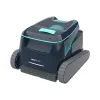
Choose the Right Dolphin Robot
for Your Swimming Pool
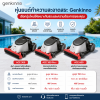
Genkinno Robotic Pool Cleaners Choose the right model for your pool and needs

Win Win Pool brings together top global brands of robotic pool cleaners in one place, including Dolphin, Zodiac, Hayward, AstralPool, Genkinno, Chasing, Winny, Kripsol, Waterco, and Win Win Pool’s own robotic models.
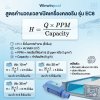
Learn how to calculate the ideal running time of an EC8 salt chlorinator using a simple formula to maintain proper chlorine levels (2 ppm). This guide helps keep your pool water clear, clean, and safe, with practical examples for 10, 20, and 35 m³ pool sizes.
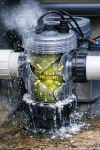
A cracked or burst salt chlorinator cell housing is a problem that shocks many pool owners. The chlorinator appears to be running normally, but suddenly you hear a loud “pop,” followed by water leaking from the system. Many people assume the unit is low quality, but in most cases, the real cause is not the machine itself — it is when the salt chlorinator continues operating without actual water flow through the cell.
Even when water is not flowing, salt water may still remain trapped inside the cell housing. If the chlorinator keeps producing chlorine from this trapped water, chlorine quickly turns into chlorine gas. The gas pressure builds up rapidly inside the housing, which can eventually crack or explode the clear plastic outer chamber.
The most common situations include: (1) closing the inlet and outlet valves during pool vacuuming to prevent sediment from entering the cell, then forgetting to reopen them; and (2) running filter backwash in AUTO mode where the pump and chlorinator operate together, but the water flows directly to the waste line instead of passing through the cell. This issue is especially common in models that use electrode-type water sensing, which can be inaccurate when water is trapped but not flowing.
The best solution is choosing a salt chlorinator with a real Flow Switch, such as the Laswim SR Series. A Flow Switch instantly stops operation when there is no real water flow, significantly reducing the risk of cracking, leakage, and costly repairs while extending the equipment lifespan.

The New Year holiday is a time when many families travel to other provinces or overseas, leaving their homes unoccupied for several days. For homeowners with swimming pools, this often leads to concerns that the water may turn green, develop unpleasant odors, or require costly cleaning and water replacement upon return.
In reality, closing a swimming pool for 7–10 days is not difficult if the correct water care principles are applied. The key is proper water preparation before leaving, using the right chemicals to work in place of daily maintenance. This approach helps control algae growth, bacteria, and the accumulation of dirt during periods when the pool is not in use.
This one-time, 10-day pool care method is designed for residential pools and can be applied to both homes without automatic control systems and those equipped with Smart Home or Smart App monitoring. It allows pool owners to reduce system operation while still maintaining stable water quality throughout the holiday period.
When chemicals are selected correctly and adjusted according to pool size, homeowners can return from their trip to find clear, clean water. With minimal effort—such as vacuuming settled debris—the pool is ready for immediate use, eliminating the need for draining or refilling and ensuring a stress-free return home.
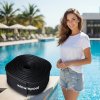
⭐ How to Choose the Right Waterstop for Swimming Pools
Selecting the proper waterstop is essential for preventing leakage through concrete joints in swimming pool structures, including floor-to-wall joints, construction joints, and areas with structural movement such as expansion joints. Choosing the correct size and thickness helps ensure long-term waterproofing performance and extends the overall lifespan of the pool.
The selection should always match the thickness of the pool wall or slab. For example, 6-inch waterstops are suitable for 15–20 cm concrete walls, while 8-inch models are recommended for 20–25 cm walls. Rib design and thickness are equally important: triple-rib models provide stronger anchorage and are ideal for high-pressure or movement-prone areas, whereas double-rib models suit general construction joints.
Winwinpool classifies its waterstops into six types—Type A, AA, B, BB, C, and CC—allowing engineers, contractors, and homeowners to select the most appropriate model according to structural requirements and pool design standards.

Chlorine 90% is an essential primary sanitizer for every swimming pool, regardless of whether it uses a salt system, mineral system, ionizer, ozone, UV, or other health-oriented treatment systems. These systems function as secondary sanitizers and cannot kill bacteria as rapidly as chlorine. If the water becomes cloudy, develops an odor, or experiences heavy usage, chlorine should be added immediately to restore water quality. Maintain a minimum chlorine level of 0.5 ppm to protect swimmers from newly introduced contaminants. Keeping chlorine in stock ensures your pool remains safe at all times. Store chlorine in a dry area, tightly sealed, and away from moisture. If you need guidance on dosage or product selection, feel free to ask anytime.
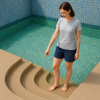
Why You Should Never Use Exposed Aggregate (Washed Sand Finish) Inside a Swimming Pool
Using exposed aggregate or washed sand finish inside the pool is strongly discouraged because chlorine and pool chemicals gradually erode the surface, causing sand particles to loosen and detach. These particles are then carried by the water flow into the filtration system, where they often get stuck in the pump impeller, leading to wear, reduced performance, and costly pump damage.
Additionally, exposed aggregate surfaces retain algae, are difficult to clean, and the rough texture may cause scratches or abrasions to swimmers. As the surface deteriorates, loose particles make the pool water cloudy and increase the frequency of maintenance, driving up long-term operating costs.
✅ Recommendation

What is a Drop Panel?
A Drop Panel is a section of the concrete slab that is thickened specifically around the column area. It appears as a depressed (lowered) area or a thickened wing surrounding the column reinforcement.
Its purposes are to:
Increase the load-bearing capacity of the pool structure
Strengthen the slab around the column
Reduce and prevent cracking
Help prevent water leakage

Different salt chlorinator brands require different salt levels such as 2,700-3,400 ppm, 3,000-4,000 ppm, or even up to 5,000 ppm.
However, the ideal range for both the swimmer and the machine is 3,000-3,500 ppm.
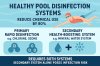
Swimming pool water treatment is an important process to maintain the cleanliness, safety, and health of pool users. Today's consumers demand safe water, reduced chlorine use, less pungent odors, less irritation, and a healthier swimming experience. Modern swimming pool treatment systems have evolved into two systems: a primary disinfection system and a secondary disinfection system. Both systems work together to produce the best and safest water quality.
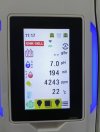
⭐ Brief Summary
Most Check Cell problems are caused by no water flow or loose cell cables.
Check the flow and cable connectors for tightness. The system will resume operation and the warning message will disappear.
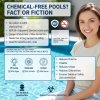
No swimming pool can be 100% chemical-free
NSF 50 certifies equipmentnot water quality
Ionizer systems reduce chlorine but disinfect slowly
For safety, a fast-acting disinfectant is still required
Best suited for private residential pools with low to moderate bather load
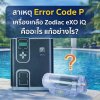
Kindly perform the following checks:
Ensure that the pool circulation pump is operating.
Verify that all relevant valves are fully open.
Clean the pump strainer basket and the skimmer basket.
Release any trapped air from the pump housing.
Inspect the flow sensor to confirm that it is clean and unobstructed.
If the issue persists after completing these steps, please inform us and we will arrange for a technician to conduct a detailed inspection. Thank you."**
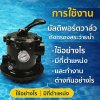
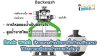
1.FIlter 2.Back Wash
3.Rinse. 4.West
5.Re Circulate 6.Closed

A good pool pump should be quiet, energy-efficient, and provide consistent water pressure to maintain clean, clear water quality.
Sturdy, sun- and chlorine-resistant materials, and designed for easy maintenance are all essential considerations for pool owners.
If you're looking for a high-performance pump, we recommend the Pentair WhisperFlo™. Click for details and to order now.
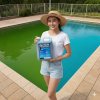
✔ “Green Salt Pool”
✔ "Salt Pool with Algae”
✔ “Green Pool Water Solution”
✔ “Swimming Pool Algae Removal”
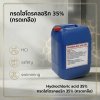
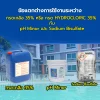
Hydrochloric acid 35% or hydrochloric acid or Hcl 35% is used for cleaning the pool floor, concrete floor, water treatment, and pH of the pool. Dosage: 3 liters per 100 cubic meters of water when the pH exceeds the standard range of 7.2-7.6.
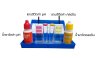
pH ตํ่ากว่า 7.2 ใช้โซดาแอซ (Na2CO3)
pH สูงกว่า 7.6 ใช้กรดเกลือ (HCl) หรือ (NaHSO4)





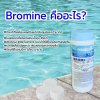
#ทำหน้าที่เหมือนคลอรีนแต่กลิ่นฉุนน้อยกว่ามากๆ #โบรมีนฆ่าเชื้อโรคในสระน้ำอุ่น #สปา #สระในร่ม #สระในอาคาร แนะนำให้ใช้โบรมีนแทนคลอรีน #ระคายเคืองน้อยกว่า #ปลอดภัยกว่าคลอรีน #นิยมใช้ในอเมริกา ยุโรป มานาน