Disinfection system for swimming pools for health by using 2 systems together to reduce chemical use by 80%.
⭐ Academic Article
Healthy Swimming Pool Disinfection System: Using Dual Systems to Reduce Chemical Usage by 80%
⸻
1. Introduction
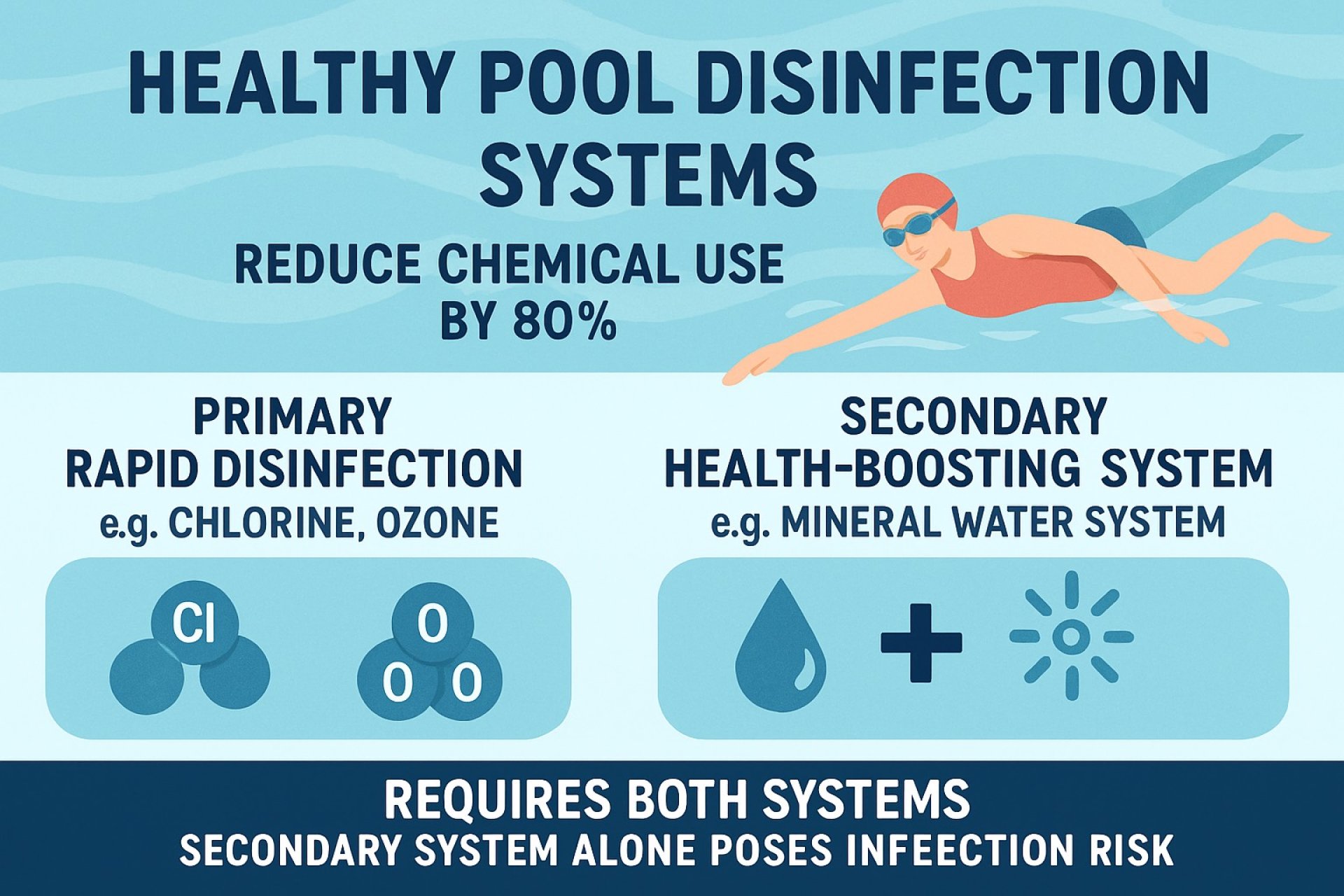
Swimming pool water treatment is a crucial process to maintain cleanliness, safety, and hygiene for pool users. Nowadays, consumers demand safe water, reduced chlorine usage, less pungent odor, reduced irritation, and a healthier swimming experience. Modern swimming pool treatment systems have therefore been developed as dual systems, consisting of a primary disinfection system and a secondary disinfection system. Both systems work together to achieve the highest water quality and maximum safety.
⸻
2. Primary Rapid Disinfection System
The primary system is responsible for rapidly killing germs immediately after contamination occurs. It is always essential in every swimming pool.
2.1 Chlorine
Chlorine is a widely used disinfectant because it can kill germs quickly and has a residual effect that protects the water continuously. It is a method certified by the World Health Organization and public health agencies. Despite its drawbacks, such as pungent smell and skin irritation, it is still considered the most reliable disinfection system.
2.2 Ozone
Ozone is a very fast disinfection system, hundreds of times more effective than chlorine. It can destroy viruses, bacteria, and certain protozoa that chlorine kills with difficulty. Ozone helps reduce combined chlorine and odors. However, because ozone decomposes quickly, it must work in conjunction with low levels of chlorine to maintain a residual in the water.
In summary, the primary system is a rapid disinfection system that is absolutely essential for the safety of pool users.
⸻
3. Secondary Health-Boosting System
The secondary system plays a role in making the water soft, clear, odorless, reducing chlorine usage, and adding a mineral-water-like feel. However, this system cannot be used as the primary disinfection system because it works slowly.
3.1 Ionizer
Ionizers use copper and silver ions to inhibit the growth of bacteria and algae, keeping the water clear and reducing algae. Copper ions have slow disinfection properties, taking hours or days to be effective, so they cannot be used alone in pools with bathers.
3.2 Oxidation
Oxidation systems, such as UV-Oxidation or Advanced Oxidation Process, help eliminate organic matter, reduce odors, reduce oil stains, and make the water look cleaner. However, it is not an instant disinfection system and must be used with a primary system.
3.3 Mineral System
Mineral systems provide water that feels soft and gentle on the skin, reducing irritation and making swimming more comfortable. It is suitable for children and those with sensitive skin. Importantly, this is not a disinfection system; it only serves to condition the water.
⸻
4. Limitations of the Secondary System (Important Precautions)
Although secondary systems are good for health and improve water quality, there are limitations that must be correctly understood.
First, secondary systems are slow disinfectants; they cannot kill germs immediately after contamination.
Second, secondary systems cannot kill certain pathogens, such as Giardia and Cryptosporidium.
Third, secondary systems leave no residual in the water, leaving the water unprotected while people are swimming.
Fourth, if used alone, the water risks contamination with pathogens, endangering the health of swimmers.
Therefore, it is crucial to understand that a secondary system cannot replace the primary system.
⸻
5. The Synergy of Both Systems
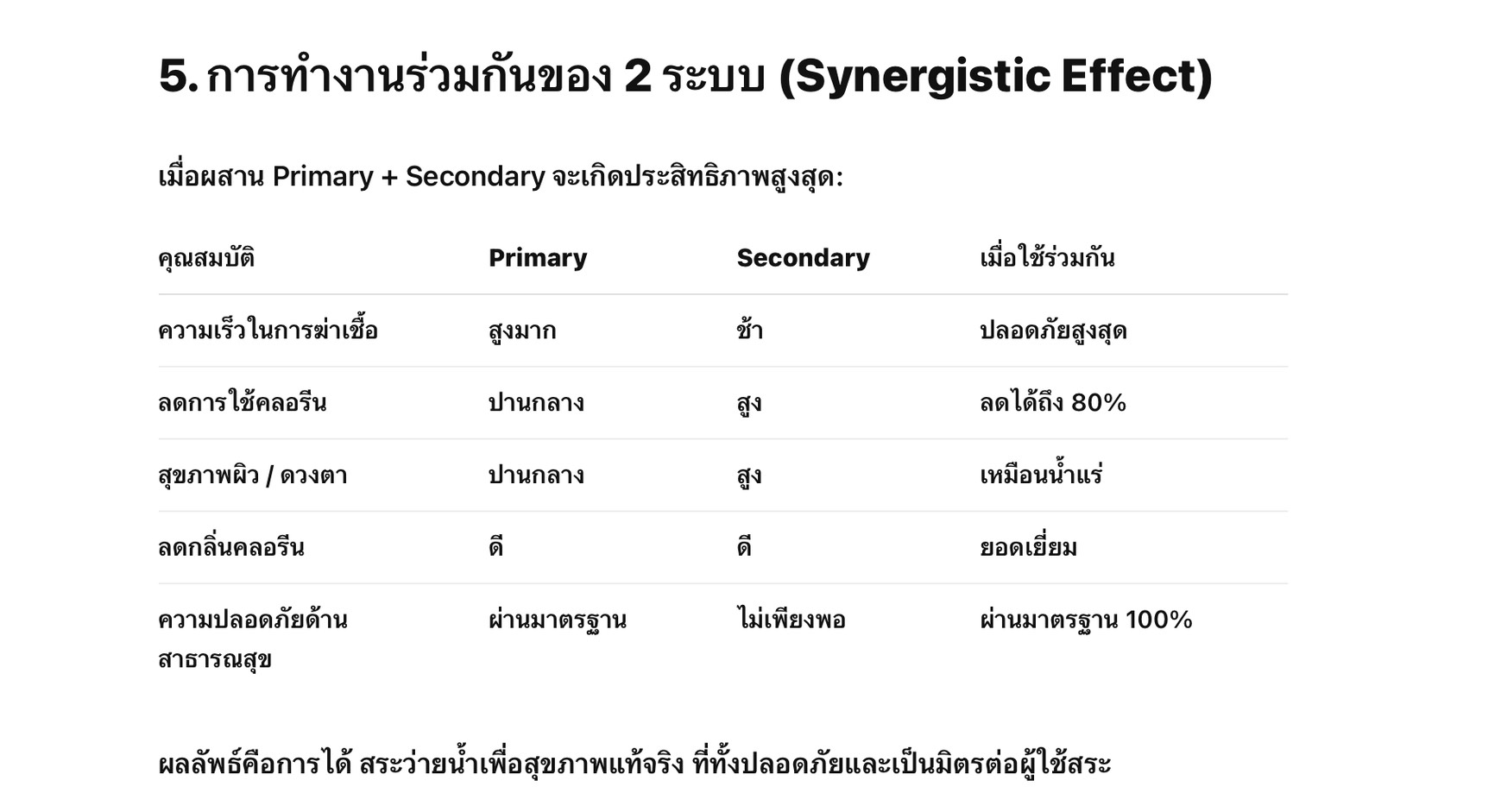
Using a primary system together with a secondary system produces results significantly better than using a single system, as explained below:
1. The primary system kills germs immediately upon contamination, while the secondary system maintains long-term water quality. working together, the water becomes safer and of higher quality than before.
2. The secondary system reduces the load on the primary system, allowing chlorine usage to be reduced by more than 80%, decreasing odors, irritation, and combined chlorine problems.
3. The collaboration of both systems makes the water gentler, like mineral water, suitable for people with sensitive skin, children, and the elderly.
4. The secondary system helps eliminate organic matter such as sweat, sunscreen, and body oils, significantly reducing chlorine odors and preventing the pool from having a pungent smell.
5. The synergistic operation ensures compliance with safety standards set by public health organizations like WHO and CDC, which a secondary system alone cannot meet.
6. Synergy provides quality in two aspects: safety from rapid disinfection and healthy water quality, resulting in users feeling better and more confident in safety.
⸻
6. Conclusion
Modern swimming pools must provide both safety and comfort. A dual treatment system is the best solution. The primary system ensures rapid disinfection for safety, while the secondary system improves water quality and reduces chlorine usage by over 80%. Both systems complement each other, resulting in clean, safe, clear, soft water, and offering a distinctly better swimming experience than traditional methods.
Compiled by Pricha Sripra-du, Engineer and Founder of winwinpool