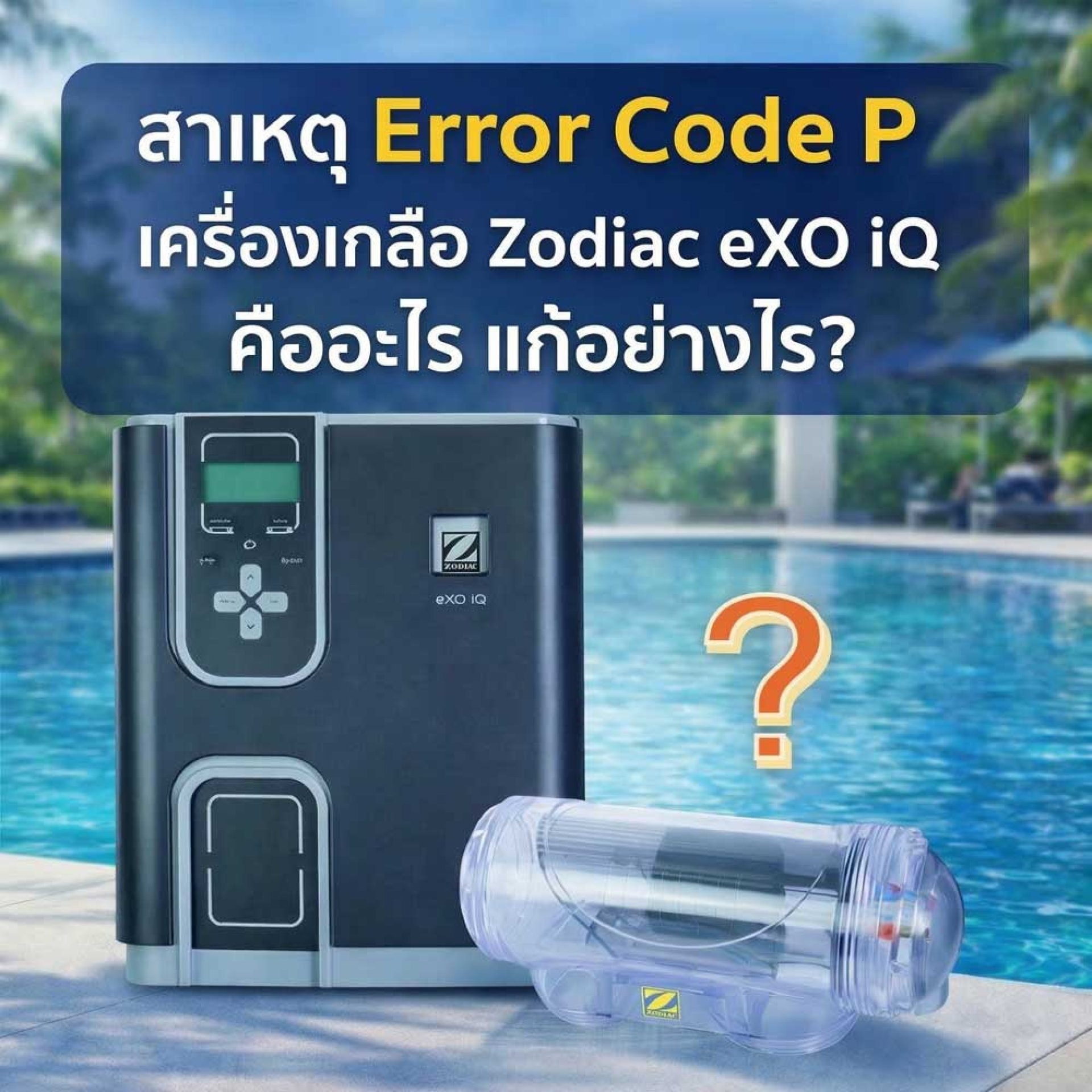
The Error Code P displayed on the Zodiac salt chlorinator indicates insufficient water flow through the cell.
Last updated: 2 Dec 2025
438 Views

Causes of Error Code P on Zodiac eXO iQ Salt Chlorinator
In the Zodiac salt chlorinator system, Error Code P = Flow Error / No Water Flow.
This means there is no water circulating through the salt cell,
or the Flow Sensor switch is not functioning.
Common Causes:
1. Pool pump is not running / No power.
2. Some water valves are closed, preventing water from passing through the salt cell.
3. Pump basket clogged / Skimmer basket clogged.
4. Flow switch is dirty, broken, or obstructed.
5. Air in the system, preventing water pressure even if the pump is running.
How to fix (Easy steps for customers):
Check if the pump is running. If the pump is not running = The chlorinator will show 'P' immediately.
- Close all valves completely, especially the inlet-outlet valves of the salt cell (to isolate for cleaning).
- Clean the pump basket and the skimmer basket (often clogged with leaves).
- Clean the skimmer filter / fiber filter. If clogged, pressure drops and water flow becomes insufficient.
- Purge air from the pump system: Open the pump basket lid slightly to let air out, then close it tightly (Open valves back up before starting).
- Check the Flow Sensor to see if hair or leaves are stuck. If the sensor is truly broken, the machine will show P even if water flow is good.
⸻
If the issue persists, Technician Check: Check the pressure gauge on the filter. If pressure is very high = Sand filter clogged (Perform Backwash). If pressure is abnormally low = Pump not priming fully, air intake, or seal leak. ***Error Code P on the Zodiac salt chlorinator means water is not flowing through the salt cell. Please check the following:
1. The pool pump must be running.
Related Content
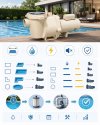
A cracked or burst salt chlorinator cell housing is a problem that shocks many pool owners. The chlorinator appears to be running normally, but suddenly you hear a loud “pop,” followed by water leaking from the system. Many people assume the unit is low quality, but in most cases, the real cause is not the machine itself — it is when the salt chlorinator continues operating without actual water flow through the cell.
Even when water is not flowing, salt water may still remain trapped inside the cell housing. If the chlorinator keeps producing chlorine from this trapped water, chlorine quickly turns into chlorine gas. The gas pressure builds up rapidly inside the housing, which can eventually crack or explode the clear plastic outer chamber.
The most common situations include: (1) closing the inlet and outlet valves during pool vacuuming to prevent sediment from entering the cell, then forgetting to reopen them; and (2) running filter backwash in AUTO mode where the pump and chlorinator operate together, but the water flows directly to the waste line instead of passing through the cell. This issue is especially common in models that use electrode-type water sensing, which can be inaccurate when water is trapped but not flowing.
The best solution is choosing a salt chlorinator with a real Flow Switch, such as the Laswim SR Series. A Flow Switch instantly stops operation when there is no real water flow, significantly reducing the risk of cracking, leakage, and costly repairs while extending the equipment lifespan.
The New Year holiday is a time when many families travel to other provinces or overseas, leaving their homes unoccupied for several days. For homeowners with swimming pools, this often leads to concerns that the water may turn green, develop unpleasant odors, or require costly cleaning and water replacement upon return.
In reality, closing a swimming pool for 7–10 days is not difficult if the correct water care principles are applied. The key is proper water preparation before leaving, using the right chemicals to work in place of daily maintenance. This approach helps control algae growth, bacteria, and the accumulation of dirt during periods when the pool is not in use.
This one-time, 10-day pool care method is designed for residential pools and can be applied to both homes without automatic control systems and those equipped with Smart Home or Smart App monitoring. It allows pool owners to reduce system operation while still maintaining stable water quality throughout the holiday period.
When chemicals are selected correctly and adjusted according to pool size, homeowners can return from their trip to find clear, clean water. With minimal effort—such as vacuuming settled debris—the pool is ready for immediate use, eliminating the need for draining or refilling and ensuring a stress-free return home.
⭐ How to Choose the Right Waterstop for Swimming Pools
Selecting the proper waterstop is essential for preventing leakage through concrete joints in swimming pool structures, including floor-to-wall joints, construction joints, and areas with structural movement such as expansion joints. Choosing the correct size and thickness helps ensure long-term waterproofing performance and extends the overall lifespan of the pool.
The selection should always match the thickness of the pool wall or slab. For example, 6-inch waterstops are suitable for 15–20 cm concrete walls, while 8-inch models are recommended for 20–25 cm walls. Rib design and thickness are equally important: triple-rib models provide stronger anchorage and are ideal for high-pressure or movement-prone areas, whereas double-rib models suit general construction joints.
Winwinpool classifies its waterstops into six types—Type A, AA, B, BB, C, and CC—allowing engineers, contractors, and homeowners to select the most appropriate model according to structural requirements and pool design standards.