All Blog




Is an automatic multiport valve worth it? The AstralPool VRAC Flat 43512 backwashes itself at the pressure set point, cutting staff time and operator errors.
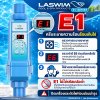
If your Laswim EC Series salt chlorinator displays E1, the heat sink temperature is too high. The cooling system, sensor and internal circuitry should all be checked. This guide walks through the manual's inspection steps, from the installation area and watching for E6, to when a technician needs to inspect the circuitry.
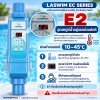
If your Laswim EC Series salt chlorinator displays E2, the water temperature is above or below the normal operating range of 10–45°C. This guide walks through the checks in order, from measuring the actual water temperature and watching for E7, to when a technician should check the temperature measurement system, and why adding salt won't fix it.
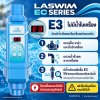
If your Laswim EC Series salt chlorinator displays E3, there is no water in the unit, and it needs enough water to produce chlorine. This guide walks through the checks in order, covering the pump, valves, leaks and air in the pipes, and how to tell whether the unit really has no water or the water level detection device is malfunctioning.
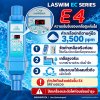
If your Laswim EC Series salt chlorinator displays E4, the salt concentration is too high, but you shouldn't change the water based on the display code alone. This guide explains how to test the actual salt level, a formula for estimating how much water to replace, a quick reference table, and the dilution steps to bring salt back to the normal 3,500 ppm.
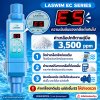
If your Laswim EC Series salt chlorinator displays E5, the salt concentration is too low, but you shouldn't add salt by the bag. This guide explains how to test the actual salt level, the formula for calculating salt by pool volume, a quick reference table, and the manual's steps for adding salt to reach the normal level of 3,500 ppm without overdosing.
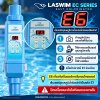
If your Laswim EC Series salt chlorinator displays the E6 code, it indicates a fault in the controller's internal temperature sensor. Have a technician check the sensor before replacing any parts. This guide explains the manual's inspection steps, what to tell the technician if E1 appears at the same time, and how E6 differs from E7.
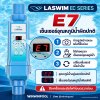
Laswim EC Series showing E7? It indicates a water temperature sensor fault. Have the sensor checked for debris before replacing parts.
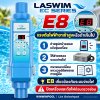
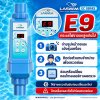
If your Laswim EC Series salt chlorinator displays the E9 code, it indicates excessive output current. The manual recommends contacting your dealer to repair or replace the controller. This guide explains what to do, what information to prepare for the technician, and how E9 differs from the E8 code.
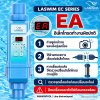
If your Laswim EC Series salt chlorinator displays the EA code, it indicates an electrode fault. The manual says to check the electrode connection first before considering replacement parts. This guide walks through the checks in order, what information to prepare for the technician, and how EA code
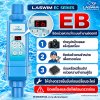
If your Laswim EC Series salt chlorinator displays the EB code, it indicates a system memory chip fault. The manual recommends contacting your dealer to repair or replace the memory chip. This guide explains what to do, what information to prepare for the technician, and how EB differs from the EC code.
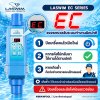
If your Laswim EC Series salt chlorinator displays the EC code, it indicates a fault in the system detection circuit. The manual says to start by switching the unit off and on again. This guide explains what to do next, how to tell whether the code is coming back, and when to contact your dealer to repair or replace the controller.
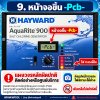
If your Hayward AquaRite 900 displays −Pcb− with the No Flow, Check Salt, High Salt and Inspect Cell lights all on, the manual indicates a main PCB (circuit board) fault, not separate flow and salt problems. This guide explains the 3 steps to take and why you should not add salt to try to clear this code.
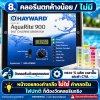
Your Hayward AquaRite 900 shows a normal salt level and the Generating light is on, yet chlorine is low or not detectable. The amount produced may simply not meet your pool's demand. This guide walks through the checks, from AUTO mode, % output and pump time to salt level and cell condition, plus factors that raise chlorine demand such as low CYA and warmer water.
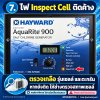
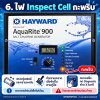
A flashing Inspect Cell light on a Hayward AquaRite 900 is a signal to inspect the cell. It may be time for a scheduled inspection, or the unit has detected reduced cell efficiency, but it does not mean the cell must be replaced. This guide covers 3 checks, including the Turbo Cell setting and scale inspection, and how to reset the warning with the Diagnostic button.
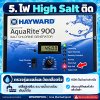
Hayward AquaRite 900 High Salt light on? Check the Turbo Cell setting and test the real salt level before draining. Recommended: 2,700–3,400 ppm.
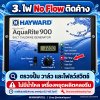
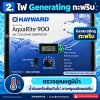
The No Flow light on a Hayward AquaRite 900 means the system cannot detect water flow, and the unit stops producing chlorine. This can be caused by a genuine lack of flow or a flow switch problem. This guide walks you through the checks in order, covering the pump, valves, flow switch cable and installation direction, and explains the difference between a flashing and a steady light.
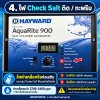
The Generating light on a Hayward AquaRite 900 shows chlorine production status. If it is flashing, the water may be too hot or too cold for the unit's operating range. This guide explains the difference between a steady and flashing light, how to check water temperature with the Diagnostic button and a thermometer, and what to know before using SUPER CHLORINATE mode.
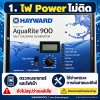
Your Hayward AquaRite 900 is switched on, but the Power light stays off and the display is blank. Don't assume the salt cell has failed. This problem should be checked starting with the power supply. Here's what you can check yourself, including the breaker, power switch and timer, plus the steps a technician should take next.

What's the difference between "1700" and "-1700" on a Hayward AquaRite 900 salt chlorinator? The number without a minus sign is the Average Salt reading, while the number with a minus sign is the Instant Salt reading. It does not mean negative salt or reversed cell polarity. This guide explains both readings, the recommended salt range of 2,700–3,400 ppm, and what to check before adding salt or replacing the cell.
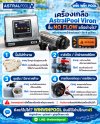
A simple troubleshooting guide for checking an AstralPool Viron salt chlorinator when the system displays a NO FLOW warning.

Discover how saltwater pools work, why many families enjoy them, and what you still need to check to keep the water comfortable and safe.
