การทำงานของ ระบบสระว่ายน้ำ ในโหมด Filter ขั้นตอนการทำงาน น้ำไหลอย่างไร
Last updated: 6 May 2025
1318 Views

การทำงานของ ระบบสระว่ายน้ำ ในโหมด Filter ขั้นตอนการทำงาน น้ำไหลอย่างไร
Related Content
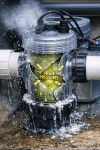
A cracked or burst salt chlorinator cell housing is a problem that shocks many pool owners. The chlorinator appears to be running normally, but suddenly you hear a loud “pop,” followed by water leaking from the system. Many people assume the unit is low quality, but in most cases, the real cause is not the machine itself — it is when the salt chlorinator continues operating without actual water flow through the cell.
Even when water is not flowing, salt water may still remain trapped inside the cell housing. If the chlorinator keeps producing chlorine from this trapped water, chlorine quickly turns into chlorine gas. The gas pressure builds up rapidly inside the housing, which can eventually crack or explode the clear plastic outer chamber.
The most common situations include: (1) closing the inlet and outlet valves during pool vacuuming to prevent sediment from entering the cell, then forgetting to reopen them; and (2) running filter backwash in AUTO mode where the pump and chlorinator operate together, but the water flows directly to the waste line instead of passing through the cell. This issue is especially common in models that use electrode-type water sensing, which can be inaccurate when water is trapped but not flowing.
The best solution is choosing a salt chlorinator with a real Flow Switch, such as the Laswim SR Series. A Flow Switch instantly stops operation when there is no real water flow, significantly reducing the risk of cracking, leakage, and costly repairs while extending the equipment lifespan.
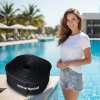
⭐ How to Choose the Right Waterstop for Swimming Pools
Selecting the proper waterstop is essential for preventing leakage through concrete joints in swimming pool structures, including floor-to-wall joints, construction joints, and areas with structural movement such as expansion joints. Choosing the correct size and thickness helps ensure long-term waterproofing performance and extends the overall lifespan of the pool.
The selection should always match the thickness of the pool wall or slab. For example, 6-inch waterstops are suitable for 15–20 cm concrete walls, while 8-inch models are recommended for 20–25 cm walls. Rib design and thickness are equally important: triple-rib models provide stronger anchorage and are ideal for high-pressure or movement-prone areas, whereas double-rib models suit general construction joints.
Winwinpool classifies its waterstops into six types—Type A, AA, B, BB, C, and CC—allowing engineers, contractors, and homeowners to select the most appropriate model according to structural requirements and pool design standards.
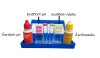
pH ตํ่ากว่า 7.2 ใช้โซดาแอซ (Na2CO3)
pH สูงกว่า 7.6 ใช้กรดเกลือ (HCl) หรือ (NaHSO4)
