Share

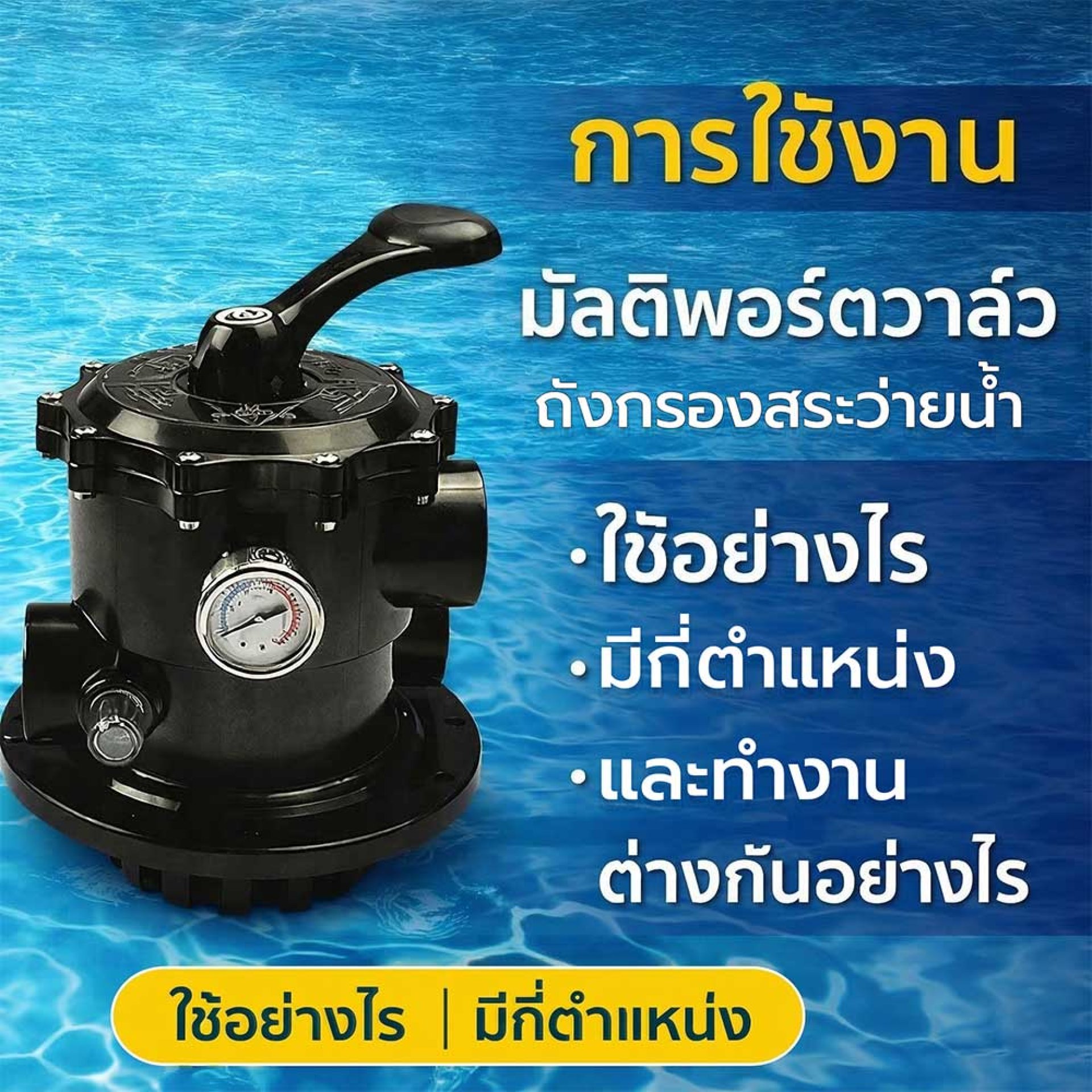
How to use a multi-port valve - How many positions does it have and how do they work differently?
Last updated: 2 Dec 2025
719 Views

Filter Operation & Maintenance   By Winwin Pool

This article is the intellectual property of Winwin Pool. Any redistribution requires prior permission for both content and images.

Written by Mr. Pricha Sripra-du 

Engineer and Owner of Winwin Pool

Multiport Valves come in 2 main types: placed on top of the filter tank (Top Mount) or placed on the side (Side Mount). Most multiport valves across various brands have 6 positions. Let's look at how each position works. In this article, we will use the Top Mount Multiport Valve as an example. 

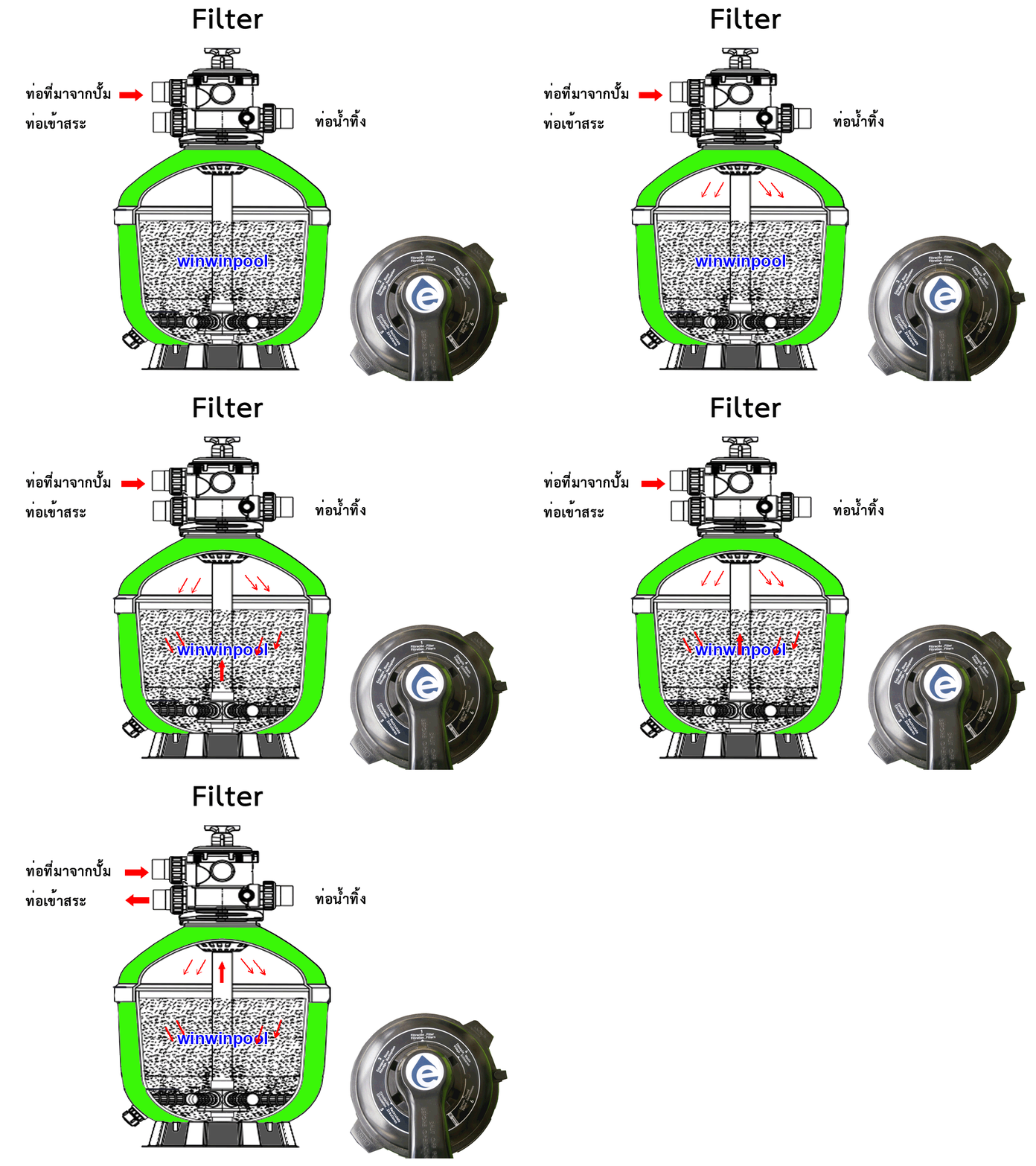
1. Filter (Filtration Position)

This is the most important position and the one used most frequently (up to 90% of the time).

Operation Process: When the multiport valve is set to 'Filter', water flows from the pump following the arrow into the top pipe marked 'PUMP'. The water flows from top to bottom through the valve ports and disperses onto the sand bed. Dirty water and debris larger than the sand particles get trapped on the surface of the filter sand, allowing only water with smaller particles to pass through. The clearest water flows into the strainers (laterals) located at the bottom, which look like fishbones. The number of laterals depends on the tank size. These strainers have very small holes (smaller than the sand grains, so sand cannot pass through; if sand passes through, it indicates a broken lateral). The water then flows up the center pipe, out the 'Return' pipe, through the salt chlorinator or other treatment systems, and finally into the pool (via floor or wall inlets). This filtration cycle repeats continuously according to the set operating hours.


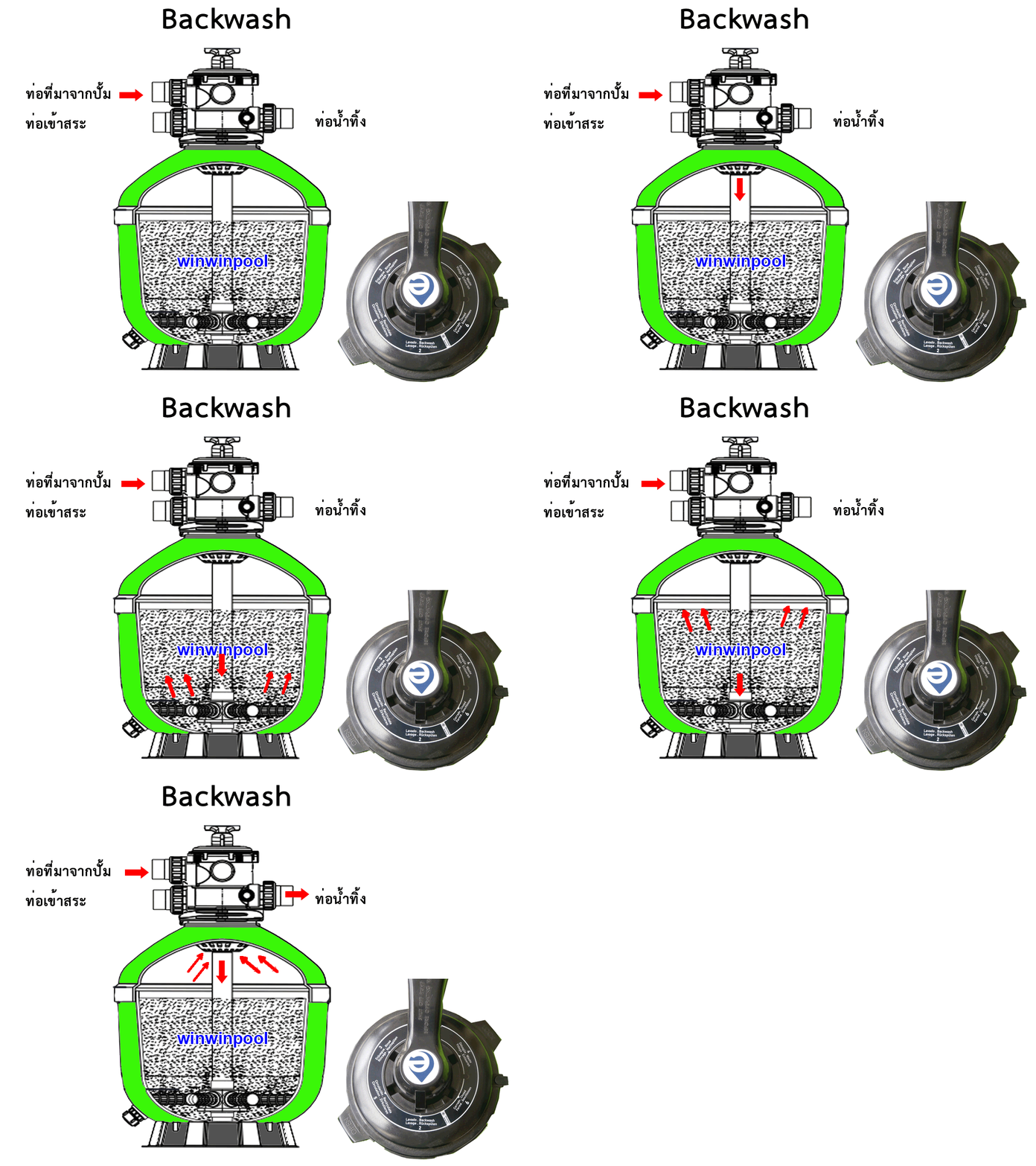
2. Back Wash (Reverse Cleaning)

As filtration occurs repeatedly, debris inevitably accumulates in the filter tank. The sand surface, once loose, can become sticky or compacted depending on the frequency of cleaning. If washed often, it won't be too sticky. If never washed, the sand can essentially turn into a hard rock. 


Let's see how this step works:

This step is second in importance only to filtering, but it cannot be neglected. 'Backwash', as the name implies, reverses the flow of filtration to clean the sticky, compacted sand, preparing it for maximum efficiency again. 

In this step, water flows from the pump into the top pipe marked 'Pump' as usual, but it is directed down the center pipe first. The water then pushes out at the bottom and flows *upwards*, lifting the sand bed. Sand at the top or loosely packed sand is easier and quicker to clean. The debris flushed out by the pump's pressure flows out through the top pipe marked 'Waste' (or 'Drain' on some brands). 

At the waste line, there is usually a clear 'Sight glass'. You can watch this to see if the water cleaning the sand has turned clear. Once clear, you can turn off the system; the process is complete.


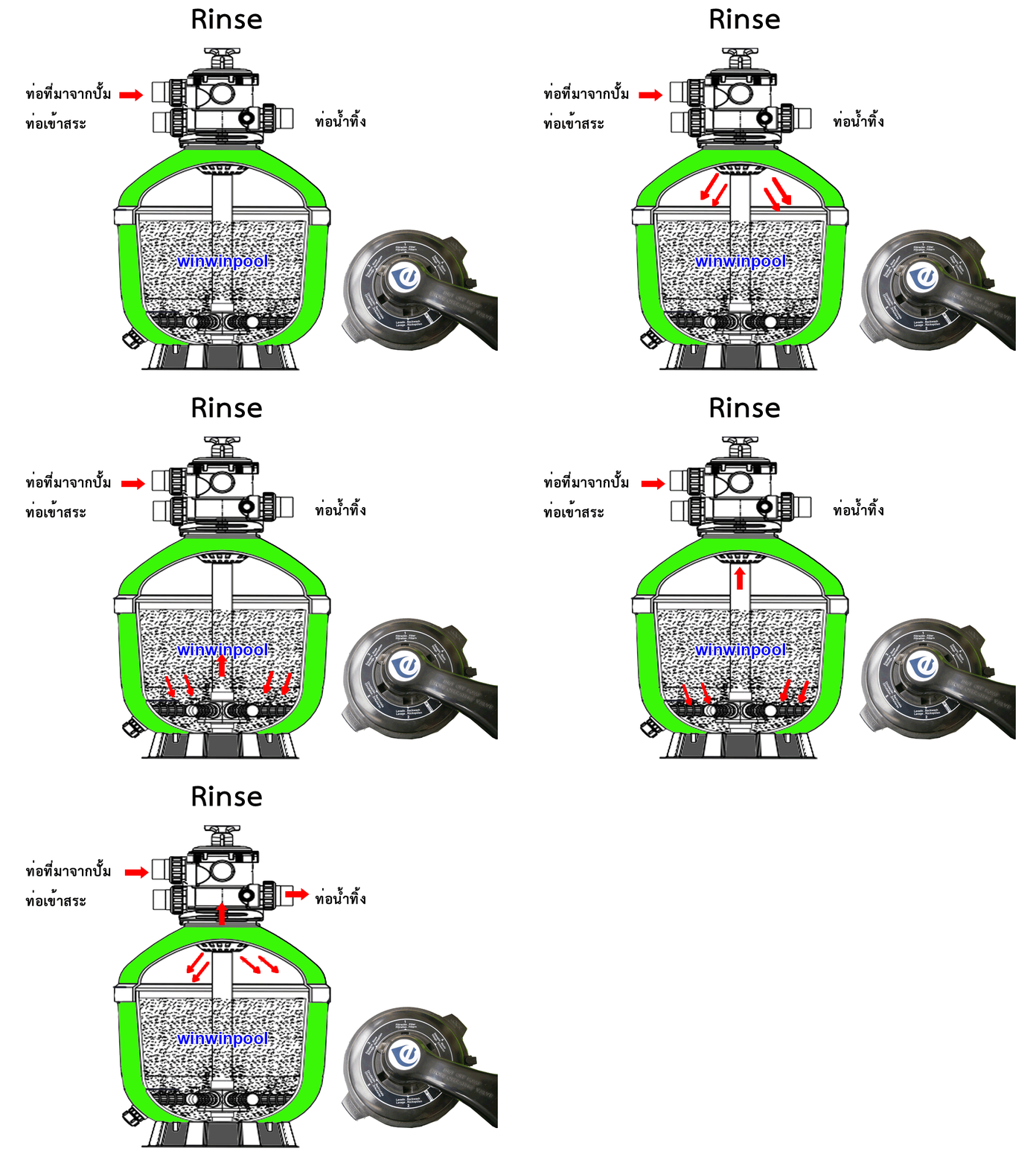
3. Rinse (Settling the Sand Bed)

After every Backwash, you must move the multiport valve to this position. This is to settle the sand bed, which was lifted and scattered, back into a compact state ready for use. However, this position still does not allow water to return to the pool; it sends water to the drain. This step takes a short timejust 1 minute is sufficient.

Water Flow (following the arrow): Water comes from the Pump into the filter valve as usual. It flows from top to bottom through the sand surface (which is currently loose), compressing it down to prepare for the next filtration cycle. The clear water then travels up the center pipe and out to the 'Waste' line.


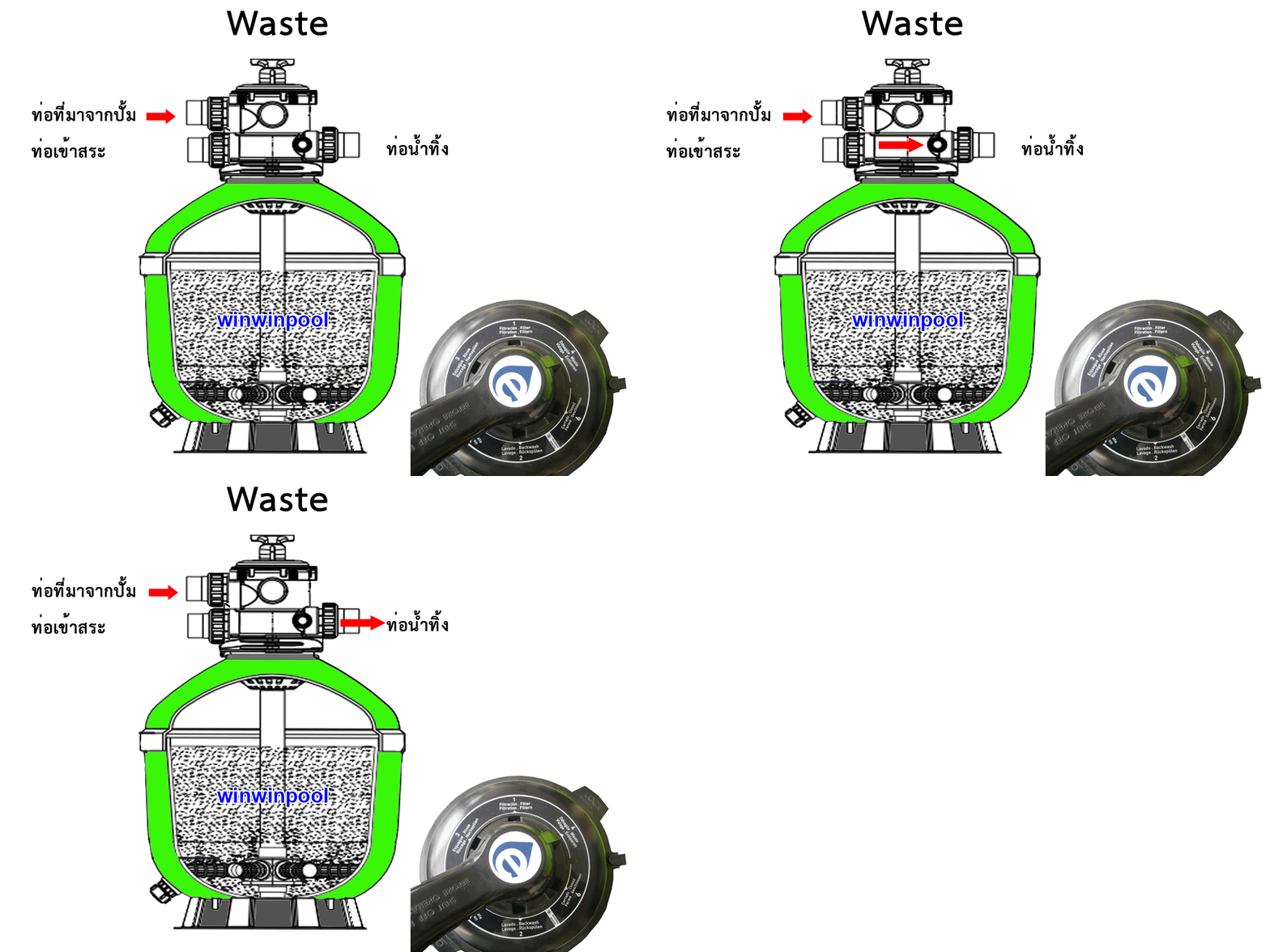
4. Waste (Bypass to Drain)

This position is used to pump water directly out of the pool without passing through the filter sand. It is also used to vacuum heavy sediment/debris directly out of the pool (Vacuum to Waste).


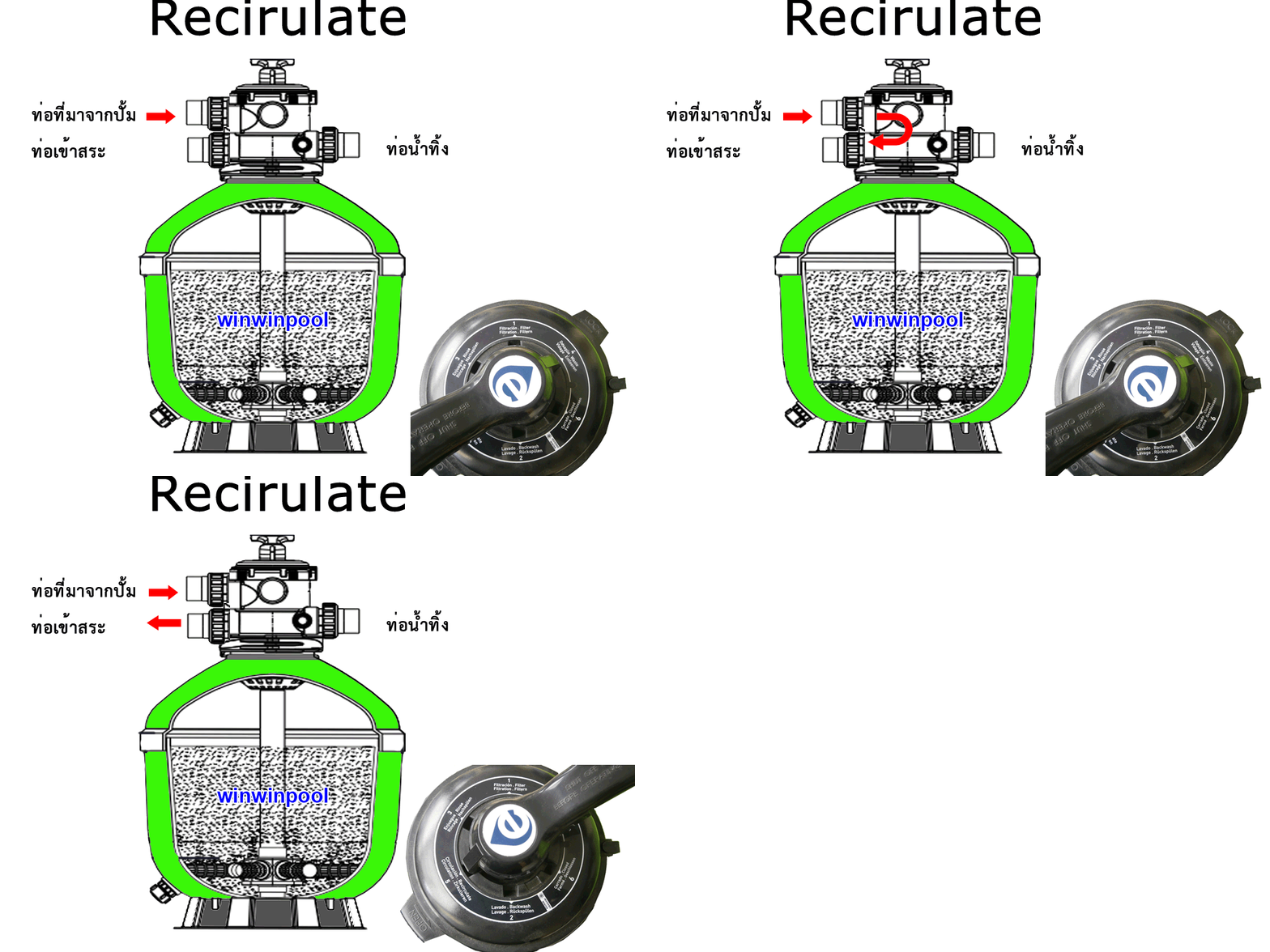
5. Recirculate (Circulate without Filtration)

This position circulates water to mix chemicals without passing through the filter sand. It is used when water conditions are poor, requiring rapid chemical mixing, or when using chemicals you don't want trapped in the sand. Water flows from the 'Pump' line directly out to the 'Return' line (following the arrow).

6. Closed (Shut Off)

Used when closing the pool for system repairs. Unless necessary, Winwin Pool does not recommend using this position to prevent accidental damage if the pump is turned on while valves are closed. 


 Order Multiport Valves (All Brands) Here


Related Content
⭐ **WATERSTOP for Swimming Pool Construction Selection Guide + Specifications (Winwinpool Standard by Pool Size & Concrete Thickness)**
⭐ How to Choose the Right Waterstop for Swimming Pools Selecting the proper waterstop is essential for preventing leakage through concrete joints in swimming pool structures, including floor-to-wall joints, construction joints, and areas with structural movement such as expansion joints. Choosing the correct size and thickness helps ensure long-term waterproofing performance and extends the overall lifespan of the pool. The selection should always match the thickness of the pool wall or slab. For example, 6-inch waterstops are suitable for 15–20 cm concrete walls, while 8-inch models are recommended for 20–25 cm walls. Rib design and thickness are equally important: triple-rib models provide stronger anchorage and are ideal for high-pressure or movement-prone areas, whereas double-rib models suit general construction joints. Winwinpool classifies its waterstops into six types—Type A, AA, B, BB, C, and CC—allowing engineers, contractors, and homeowners to select the most appropriate model according to structural requirements and pool design standards.
Why Every Swimming Pool Needs 90% Chlorine?
Chlorine 90% is an essential primary sanitizer for every swimming pool, regardless of whether it uses a salt system, mineral system, ionizer, ozone, UV, or other health-oriented treatment systems. These systems function as secondary sanitizers and cannot kill bacteria as rapidly as chlorine. If the water becomes cloudy, develops an odor, or experiences heavy usage, chlorine should be added immediately to restore water quality. Maintain a minimum chlorine level of 0.5 ppm to protect swimmers from newly introduced contaminants. Keeping chlorine in stock ensures your pool remains safe at all times. Store chlorine in a dry area, tightly sealed, and away from moisture. If you need guidance on dosage or product selection, feel free to ask anytime.
Why You Should Never Use Exposed Aggregate (Washed Sand Finish) Inside a Swimming Pool
Why You Should Never Use Exposed Aggregate (Washed Sand Finish) Inside a Swimming Pool Using exposed aggregate or washed sand finish inside the pool is strongly discouraged because chlorine and pool chemicals gradually erode the surface, causing sand particles to loosen and detach. These particles are then carried by the water flow into the filtration system, where they often get stuck in the pump impeller, leading to wear, reduced performance, and costly pump damage. Additionally, exposed aggregate surfaces retain algae, are difficult to clean, and the rough texture may cause scratches or abrasions to swimmers. As the surface deteriorates, loose particles make the pool water cloudy and increase the frequency of maintenance, driving up long-term operating costs. ✅ Recommendation
icon-messenger
เว็บไซต์นี้มีการใช้งานคุกกี้ เพื่อเพิ่มประสิทธิภาพและประสบการณ์ที่ดีในการใช้งานเว็บไซต์ของท่าน ท่านสามารถอ่านรายละเอียดเพิ่มเติมได้ที่ Privacy Policy and Cookies Policy
Compare product
0/4
Remove all
Compare