Share

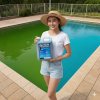
Green saltwater pool water: How to fix it? Causes and solutions, along with a review of using Algae stop CU to make it crystal clear again.
Last updated: 2 Dec 2025
585 Views

# Green Algae Problems in Saltwater Pools

## What causes it? How to fix it permanently? (Easy Guide for Pool Maintenance)

Many saltwater pool owners frequently encounter **Green Water / Algae blooms**, even when the salt chlorinator is running constantly.
In reality, a **Salt Pool is simply a type of Chlorine Pool**. If the water balance is not appropriate, algae can grow just as easily.


# Major Causes of Green Algae in Saltwater Pools

## 1) Insufficient Chlorine

* The salt chlorinator is not running for enough hours.
* The Output percentage is set too low.
* High bather load / Rain / Strong sunlight causes chlorine to deplete quickly.
When chlorine drops below **1 ppm**, algae will start to grow immediately.

## 2) pH Level is Too High

If pH > 7.8, chlorine cannot function effectively, even if the ppm reading seems sufficient.
The result is: **"Chlorine is present, but it cannot kill bacteria."**

## 3) Poor Water Circulation

* Pump running time is too short.
* Inlet nozzles are not distributing water throughout the pool.
* There are "Dead Spots" behind ladders/pool corners.
These are the spots where algae starts to grow easiest.

## 4) Dirty Filter / Not Backwashing

Clogged sand filter/media
= Cannot trap dirt effectively
= Becomes **"Food"** for algae.

## 5) Dust, Leaves, and Organic Debris

Homes with trees near the pool often face this issue. Algae grows very fast, especially during the rainy season and strong sunlight.

---

# Before Fixing: Check 4 Important Things

Pool caretakers should follow this order before adding any chemicals.

### 1) Check pH

It should be between **7.2 - 7.6**

### 2) Check Chlorine

Must be at least **1-3 ppm**.
If chlorine is zero, it is recommended to **Shock Chlorine** or increase the chlorinator's running time.

### 3) Clean Filter (Backwash)

Because dead algae will flow into and clog the filter significantly.

### 4) Scrub Floor and Walls

To allow chemicals to reach the algae fully, preventing it from hiding under a biofilm.

---

# How to Fix Green Algae in Salt Pools (Step-by-Step)

### **Step 1: Balance the Water**

* pH: 7.2 - 7.6
* Chlorine: 1 - 3 ppm
* Turn on the circulation pump for at least 12 hours.

### **Step 2: Scrub Algae Thoroughly**

Scrub walls, floors, dead spots, and ladders.
Algae floating in the water is a good sign.

### **Step 3: Add Algaecide**

To kill floating algae and prevent further growth.

### **Step 4: Run Filter System 12-24 Hours**

The water will start changing from Green -> Light Green -> Cloudy -> Clear.

### **Step 5: Backwash + Vacuum**

Remove all dead algae from the system.

---

# Preventing Algae Recurrence

### Check Chlorine + pH 1-2 times/week

### Backwash at least once a week

### Run pump suitable for pool size (Generally 8-12 hours/day)

### Collect leaves and debris daily

And importantly:
**Use a preventative Algaecide (Maintenance Dose)** to inhibit new algae growth, especially during rainy seasons and summer when algae grows fastest.


# Recommended Product: Algae stop CU

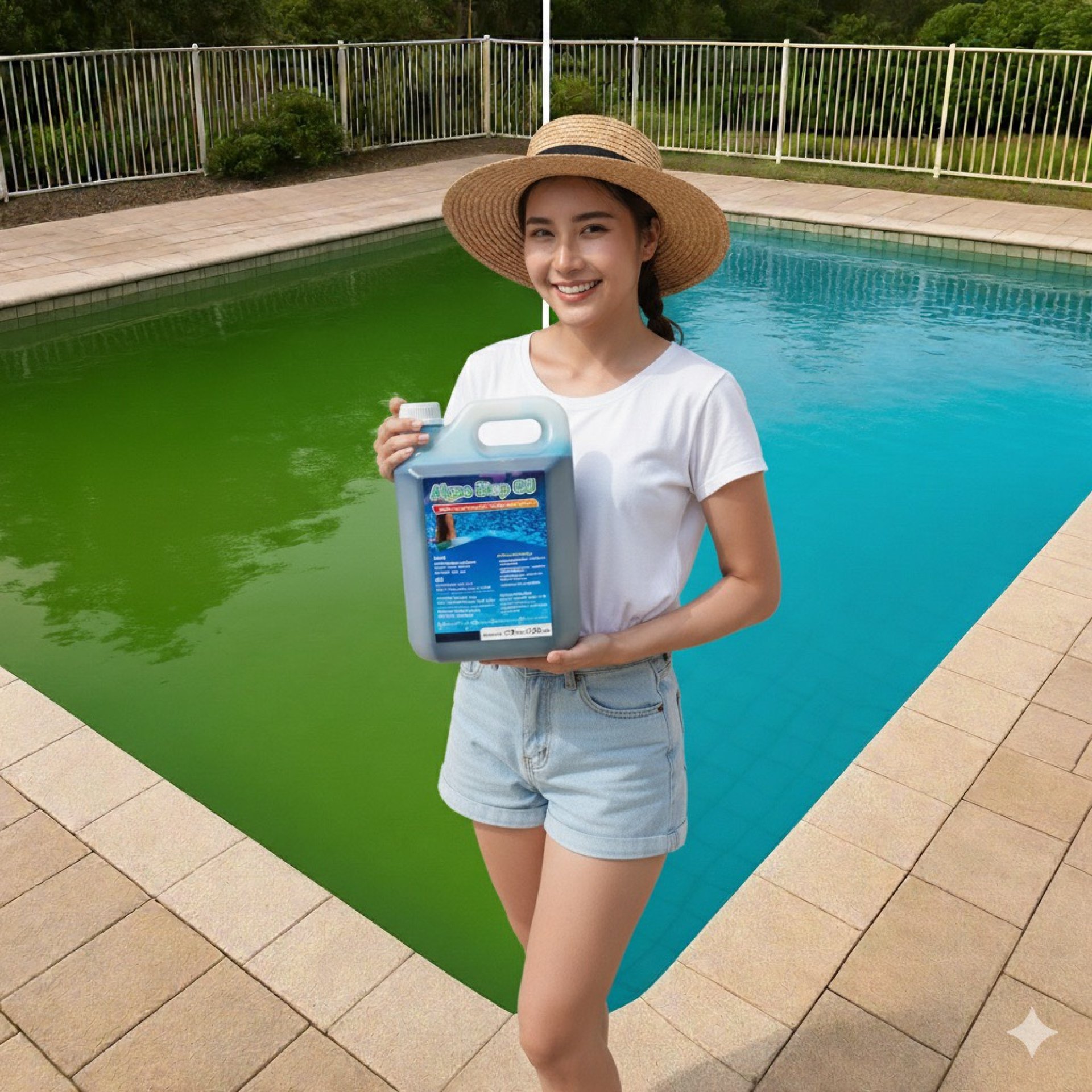
After fixing the system, choosing the right algaecide is crucial. **Algae stop CU** is a popular choice for salt pools because:

### Kills Algae Fast

Copper destroys algae cell walls directly. Fast acting, water clears up quickly.

### Ideal for Salt Pools

Enhances chlorine efficiency, especially when the salt chlorinator cannot keep up with demand.

### Easy to Use

Pour around the pool edge while the pump is running. Disperses quickly, requires small dosage.

### Can be used for both Curing and Prevention

* **Kill dose:** When algae is present.
* **Maintenance dose:** Every 1-2 weeks.

### Safe when used according to label

Does not stain pool walls, does not discolor water.


**Salt pools are the easiest to maintain, but water balance must be correct.**
When green algae problems occur: Adjusting pH, Increasing Chlorine, Scrubbing, and Running the System are the core solutions.
And to prevent the problem from returning,
**Supplementing with Algae stop CU helps control algae for the long term. Suitable for home pools and all service jobs.**
Order Algae stop CU


Related Content
 “Salt Chlorinator Cell Housing Cracked… The Real Cause Is NOT a Bad Machine — It’s When the Unit Runs Without Water Flow!” Many pool owners experience this and get shocked…
A cracked or burst salt chlorinator cell housing is a problem that shocks many pool owners. The chlorinator appears to be running normally, but suddenly you hear a loud “pop,” followed by water leaking from the system. Many people assume the unit is low quality, but in most cases, the real cause is not the machine itself — it is when the salt chlorinator continues operating without actual water flow through the cell. Even when water is not flowing, salt water may still remain trapped inside the cell housing. If the chlorinator keeps producing chlorine from this trapped water, chlorine quickly turns into chlorine gas. The gas pressure builds up rapidly inside the housing, which can eventually crack or explode the clear plastic outer chamber. The most common situations include: (1) closing the inlet and outlet valves during pool vacuuming to prevent sediment from entering the cell, then forgetting to reopen them; and (2) running filter backwash in AUTO mode where the pump and chlorinator operate together, but the water flows directly to the waste line instead of passing through the cell. This issue is especially common in models that use electrode-type water sensing, which can be inaccurate when water is trapped but not flowing. The best solution is choosing a salt chlorinator with a real Flow Switch, such as the Laswim SR Series. A Flow Switch instantly stops operation when there is no real water flow, significantly reducing the risk of cracking, leakage, and costly repairs while extending the equipment lifespan.
Leaving Home for 7-10 Days During the New Year How to Maintain Your Swimming Pool So Its Clear and Ready to Swim When You Return
The New Year holiday is a time when many families travel to other provinces or overseas, leaving their homes unoccupied for several days. For homeowners with swimming pools, this often leads to concerns that the water may turn green, develop unpleasant odors, or require costly cleaning and water replacement upon return. In reality, closing a swimming pool for 7–10 days is not difficult if the correct water care principles are applied. The key is proper water preparation before leaving, using the right chemicals to work in place of daily maintenance. This approach helps control algae growth, bacteria, and the accumulation of dirt during periods when the pool is not in use. This one-time, 10-day pool care method is designed for residential pools and can be applied to both homes without automatic control systems and those equipped with Smart Home or Smart App monitoring. It allows pool owners to reduce system operation while still maintaining stable water quality throughout the holiday period. When chemicals are selected correctly and adjusted according to pool size, homeowners can return from their trip to find clear, clean water. With minimal effort—such as vacuuming settled debris—the pool is ready for immediate use, eliminating the need for draining or refilling and ensuring a stress-free return home.
⭐ **WATERSTOP for Swimming Pool Construction Selection Guide + Specifications (Winwinpool Standard by Pool Size & Concrete Thickness)**
⭐ How to Choose the Right Waterstop for Swimming Pools Selecting the proper waterstop is essential for preventing leakage through concrete joints in swimming pool structures, including floor-to-wall joints, construction joints, and areas with structural movement such as expansion joints. Choosing the correct size and thickness helps ensure long-term waterproofing performance and extends the overall lifespan of the pool. The selection should always match the thickness of the pool wall or slab. For example, 6-inch waterstops are suitable for 15–20 cm concrete walls, while 8-inch models are recommended for 20–25 cm walls. Rib design and thickness are equally important: triple-rib models provide stronger anchorage and are ideal for high-pressure or movement-prone areas, whereas double-rib models suit general construction joints. Winwinpool classifies its waterstops into six types—Type A, AA, B, BB, C, and CC—allowing engineers, contractors, and homeowners to select the most appropriate model according to structural requirements and pool design standards.
icon-messenger
เว็บไซต์นี้มีการใช้งานคุกกี้ เพื่อเพิ่มประสิทธิภาพและประสบการณ์ที่ดีในการใช้งานเว็บไซต์ของท่าน ท่านสามารถอ่านรายละเอียดเพิ่มเติมได้ที่ Privacy Policy and Cookies Policy
Compare product
0/4
Remove all
Compare