“Salt Chlorinator Cell Housing Cracked… The Real Cause Is NOT a Bad Machine — It’s When the Unit Runs Without Water Flow!” Many pool owners experience this and get shocked…
Last updated: 8 Jan 2026
3348 Views
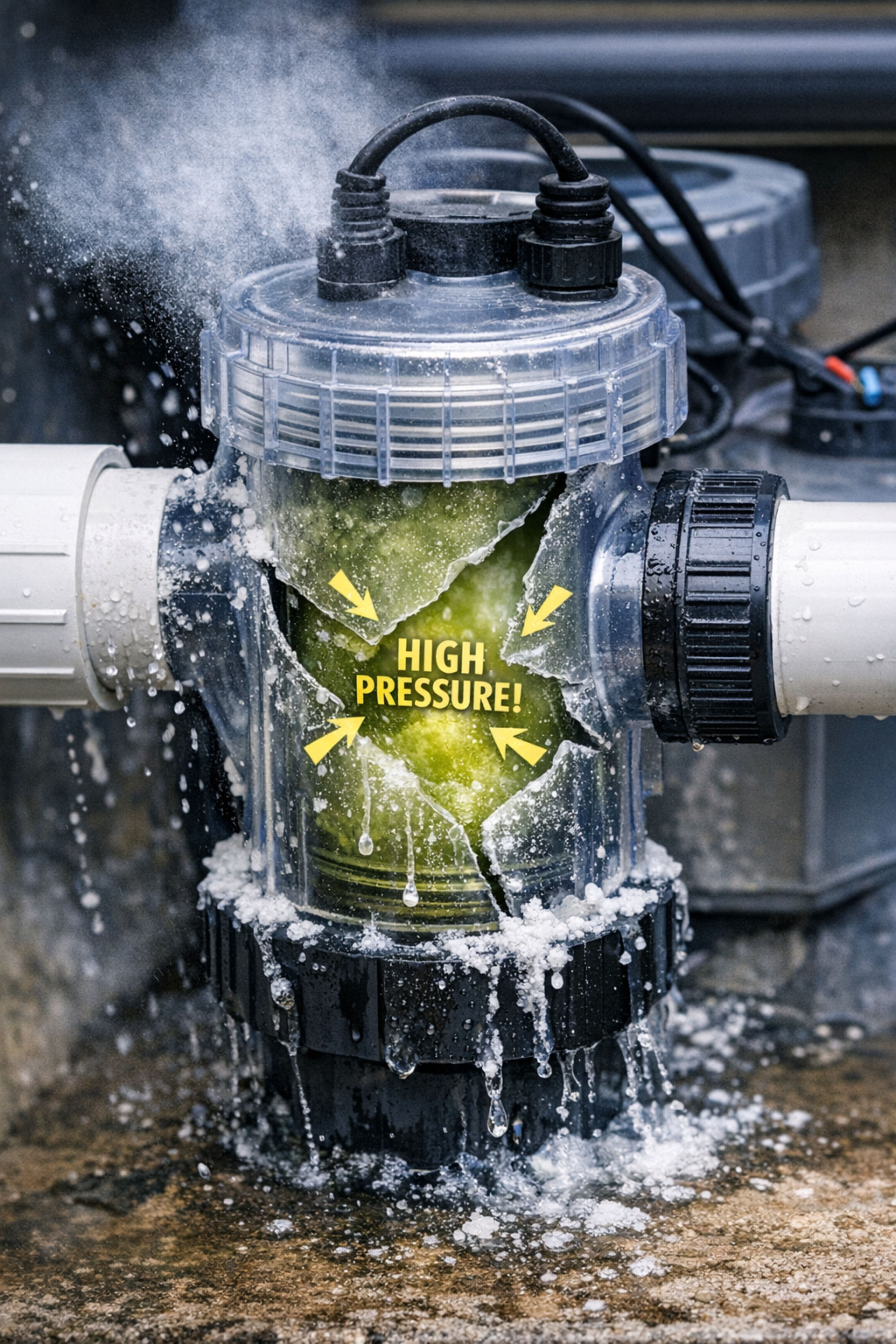
“Salt Chlorinator Cell Housing Cracked… The Real Cause Is NOT a Bad Machine — It’s When the Unit Runs Without Water Flow!”
Many pool owners experience this and get shocked…
✅ The salt chlorinator is running
✅ Suddenly you hear a loud “POP!” or notice water leaking
❌ Then you check the system and find the clear plastic cell housing cracked or exploded
Most people think the machine is low quality…
But the truth is, in most cases, the main cause is incorrect operation without realizing it.
✅ Main Cause: The Salt Chlorinator Works While No Water Flows Through the Cell
Even when there is no flow, salt water may still remain trapped inside the cell housing.
When the salt chlorinator continues operating…
it keeps producing chlorine from the salt water trapped inside the cell.
➡️ The chlorine turns into chlorine gas
➡️ Pressure builds up rapidly
Until the clear plastic outer housing cracks or bursts.
✅ The 2 Most Common Situations (Very Common!)
1) Closing the inlet/outlet valves during vacuuming — and forgetting to reopen them
Many people close the valves because they don’t want dirt/sediment to pass through the cell.
But after vacuuming… they forget to open the valves again.
✅ Result: The salt chlorinator runs, but no water flows through the cell → CRACKED!
✅ Prevention
✔ Always reopen the valves before turning the salt chlorinator back on
✔ Add a warning label on the valves: “Open before operation”
2) Backwashing in AUTO mode (Pump + Salt Chlorinator run together) — but water does NOT pass through the cell
In many pool systems, during AUTO backwash, water goes directly to the waste line, not through the cell.
But if the salt chlorinator is still running…
it produces chlorine gas → pressure rises → the cell housing cracks.
✅ Prevention
✔ Always turn OFF the salt chlorinator during backwash
✔ Or use a model that automatically stops when there is no real water flow
❗ Why do some salt chlorinators crack more easily than others?
Because many models use electrode-type water sensing (conductivity detection) to confirm water flow.
However, this sensing system is NOT accurate when:
✅ Water is NOT flowing
❌ But water is still trapped inside the cell
The machine mistakenly believes water is flowing…
so it continues operating → pressure builds → housing cracks.
✅ This problem can be eliminated by using a salt chlorinator with a real Flow Switch (high accuracy).
✅ Best Solution: Choose a Salt Chlorinator with a Real Flow Switch — Example: Laswim SR Series
✅ Equipped with a Flow Switch that instantly stops operation when there is no real water flow
✅ Compact size, space-saving design
✅ Easy installation and easy maintenance
✅ Affordable price
✅ Greatly reduces the risk of cell housing cracking
✅ Quick Summary
Salt chlorinator cell housings do not crack because the machine is always poor quality.
The main cause is:
The unit runs while water is not flowing through the cell.
The best prevention is choosing a model with a Flow Switch for real flow protection.
If you’re planning to replace your salt chlorinator or buy a new one,
✅ We recommend Laswim SR Series.
Message us — we’ll help you select the right model for your pool size for FREE! ✅

Tags :
Related Content
If your Laswim EC Series salt chlorinator displays the EC code, it indicates a fault in the system detection circuit. The manual says to start by switching the unit off and on again. This guide explains what to do next, how to tell whether the code is coming back, and when to contact your dealer to repair or replace the controller.

If your Laswim EC Series salt chlorinator displays the E6 code, it indicates a fault in the controller's internal temperature sensor. Have a technician check the sensor before replacing any parts. This guide explains the manual's inspection steps, what to tell the technician if E1 appears at the same time, and how E6 differs from E7.

Learn the causes of cloudy pool water and how to restore crystal-clear water using proper water balance, shock chlorination, and pool flocculant.
