Why You Should Never Use Exposed Aggregate (Washed Sand Finish) Inside a Swimming Pool
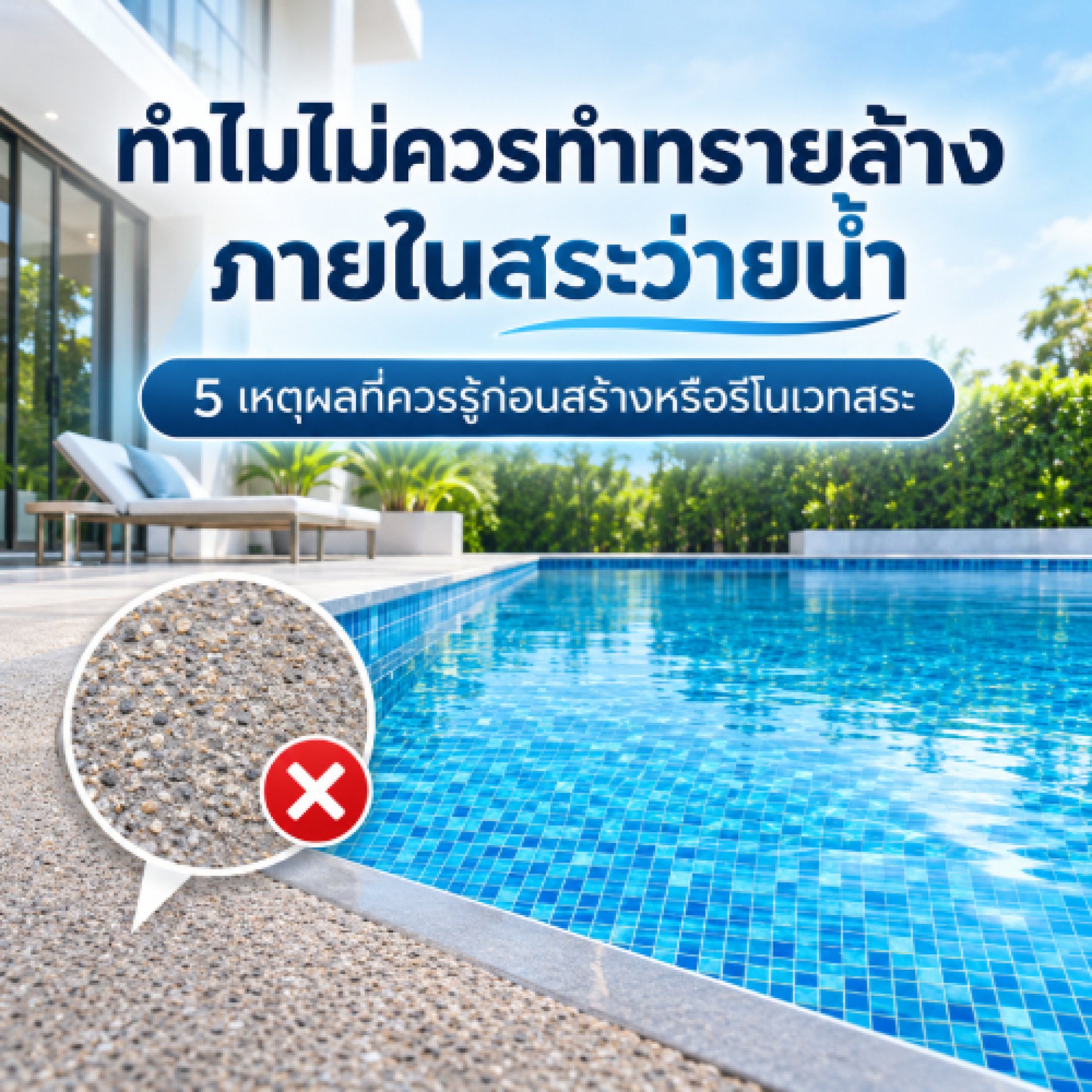
Why You Shouldn't Use Wash Sand Finish Inside Your Pool: 5 Reasons to Know Before You Build or Renovate
Ordinary wash sand can work well around a pool, but using a material that isn't designed for continuous water immersion inside the pool can lead to surface deterioration, debris build-up and higher maintenance costs.
The 1-Minute Summary
Wash sand made for general paving is better suited to pool decks than to pool floors and walls, unless it is certified for continuous water immersion. Otherwise it can deteriorate, collect stains and leave a rough surface. Inside the pool, use materials designed specifically for immersion, such as mosaic tiles or a pool coating system.
5 Reasons Not to Use Wash Sand Inside Your Pool
Pool Water and Chemicals Erode the Surface
Wash sand relies on cement to bind the sand grains, and it isn't designed to sit in chlorinated water all the time. Before long, especially when pH is low or the water chemistry is out of balance, the cement gradually erodes. The surface cracks and wears, sand grains come loose, and the finish deteriorates much faster than standard pool materials.
Loose Sand Damages Your Pump and Filtration System
Loose sand is drawn into the circulation system by suction and can build up in these key components:
The result: a worn impeller, a noisy pump, dropping water pressure and leaking seals. In severe cases, the pump may need replacing, which is a major expense.
Algae and Dirt Cling and Are Hard to Remove
The porous, rough texture of wash sand is an ideal place for algae and stains to take hold:
Even with good care, swimmers may feel the pool looks dirty, which hurts your image, especially for hotels, resorts and pool villas.
A Rough Surface Increases the Risk of Injury
Skin softens in water, so contact with a rough surface easily scrapes feet, knees and elbows, particularly for children who swim for long periods and for older swimmers. Swimwear can also snag and pill faster.
Higher Long-Term Maintenance Costs
Surface shedding, algae and difficult cleaning all add up to steadily rising costs:
Over the life of the pool, the total cost ends up higher than choosing a proper pool finish from the start.

Comparing Pool Interior Finishes
| Criteria | Wash Sand | Mosaic Tiles | Pool Coating (Epoxy / Pool Coat) |
|---|---|---|---|
| Water and chemical resistance | Low | High | High (when the full system is applied) |
| Surface smoothness | Very rough | Smooth | Smooth |
| Algae build-up | Clings easily, hard to clean | Easy to clean | Easy to clean |
| Impact on pump and filtration | Loose sand enters the system | Low | Low |
| Suitable for pool interior | Not recommended | Recommended | Recommended |
This table compares general characteristics. Actual service life depends on installation quality and how well water chemistry is maintained.
Recommended Materials for Pool Interiors

High-Quality Mosaic Tiles
Durable, fade-resistant and easy to clean. Suitable for pools of any size and for premium projects.

Glazed Pool Tiles
A glazed, water-resistant and chemical-resistant surface. Choose tiles rated for underwater use and pair them with waterproof grout.

Pool Coating System (Epoxy / Pool Coat)
Ideal for renovating concrete pools to a smooth, attractive finish on a controlled budget. Proper surface preparation and priming are essential.

Vinyl Liner
Soft to the touch and quick to install. Suitable for prefabricated pools and certain structural pool types.
Conclusion
Wash sand made for general paving can be used on pool decks when the right type and texture are chosen, but it should not be used inside the pool unless it is certified for continuous water immersion, as it may deteriorate and increase maintenance costs.
Choosing the right material from the start saves money and keeps your pool beautiful for years.
Frequently Asked Questions
My pool already has a wash sand finish. Do I need to tear it all out?
What are the signs that sand has got into my pump?
How is the pebble finish seen in overseas pools different from wash sand?
How should I care for a wash sand pool deck?
Should I choose tiles or a pool coating?
Planning to Build or Renovate a Pool?
Get free advice from the Win Win Pool Shop team. We'll help you choose the right pool finish, pump, filtration system and equipment for your pool size and usage.