How Long Should You Run an EC8 Salt Chlorinator? Hour Guide by Pool Size for Clear, Clean, and Safe Pool Water
♂️ Salt Chlorinator Running Time Formula (EC8 Model)
One of the most common questions pool owners ask is:
“How many hours should I run my salt chlorinator to keep the water clean and safe?”
The answer depends on your pool size and the chlorine level required. In this guide, we’ll show you a simple formula and real examples using the EC8 salt chlorinator (8 g/h).
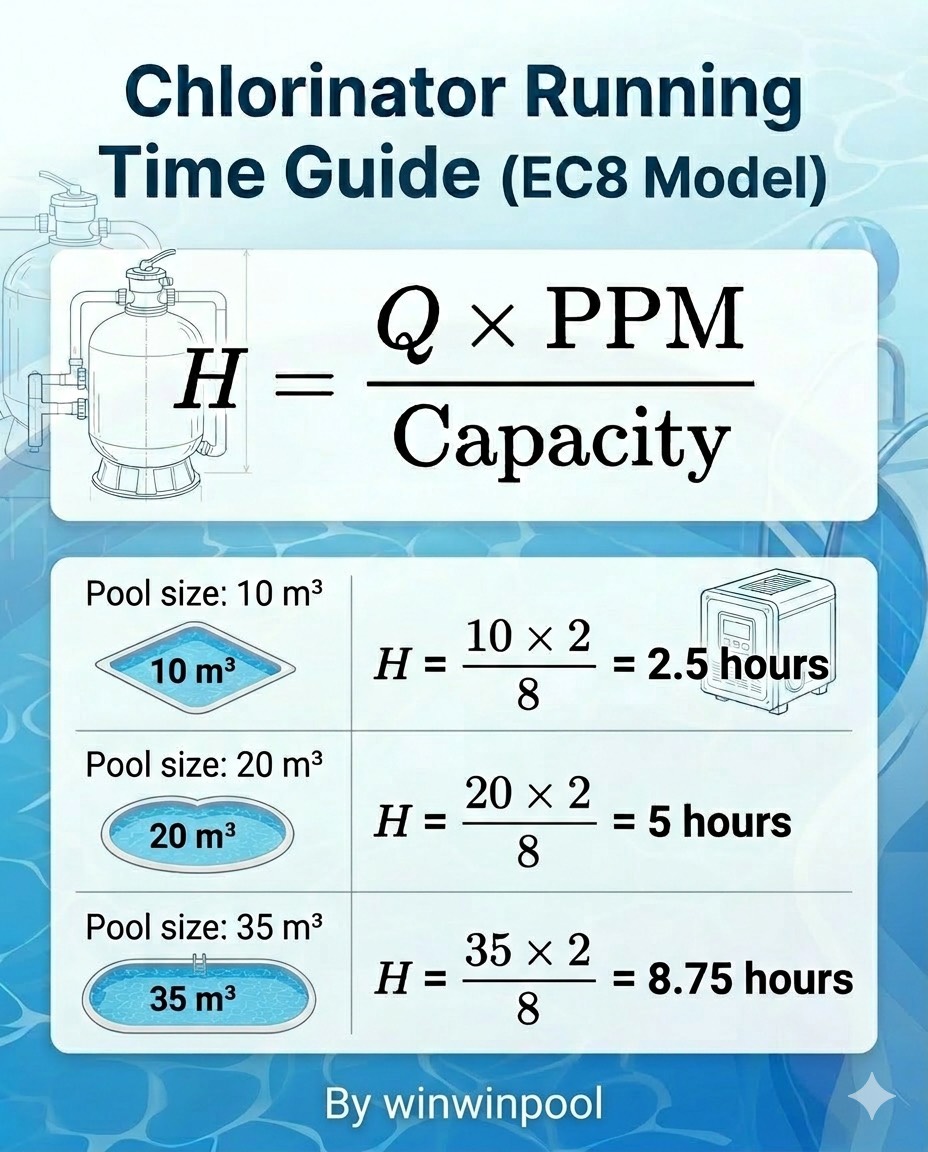
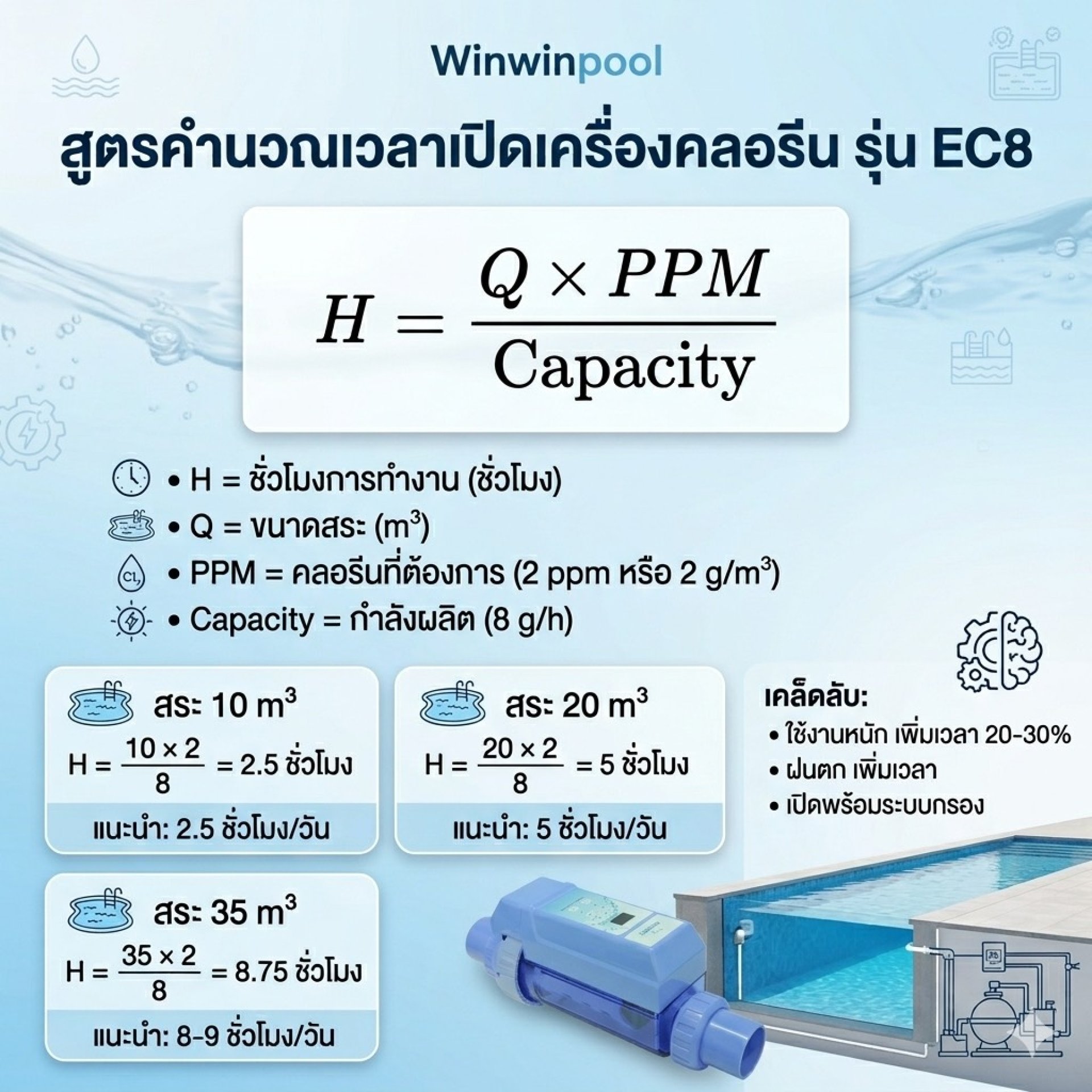
Simple Formula
H = (Q × PPM) / Capacity
Variables Explained
H = Operating time (hours)
Q = Pool volume (m³)
PPM = Desired chlorine level (recommended 2 ppm or 2 g/m³)
Capacity = Chlorinator output (EC8 = 8 g/h)
Practical Examples (EC8 Model)
Pool Size: 10 m³
H = (10 × 2) / 8 = 2.5 hours
✅ Recommended: 2.5 hours per day
Pool Size: 20 m³
H = (20 × 2) / 8 = 5 hours
✅ Recommended: 5 hours per day
Pool Size: 35 m³
H = (35 × 2) / 8 = 8.75 hours
✅ Recommended: 8–9 hours per day
Expert Tips
Increase runtime by 20–30% during heavy pool usage
Extend runtime during rainy or cloudy weather
If water turns green, temporarily increase chlorine level (3–4 ppm)
Always run the chlorinator together with the filtration system
Conclusion
Using this formula allows you to:
Maintain stable chlorine levels
Keep your pool clear, clean, and safe
Avoid unnecessary chemical usage
Optimize energy consumption
Whether you have a small or large pool, setting the correct chlorinator runtime is key to professional-level pool care.
Why Choose EC8 from Winwinpool?
Stable chlorine production (8 g/h)
Energy-efficient and easy to use
Ideal for residential pools
Expert support and consultation available