Share

How Long Should You Run an EC8 Salt Chlorinator? Hour Guide by Pool Size for Clear, Clean, and Safe Pool Water
Last updated: 18 Mar 2026
1099 Views

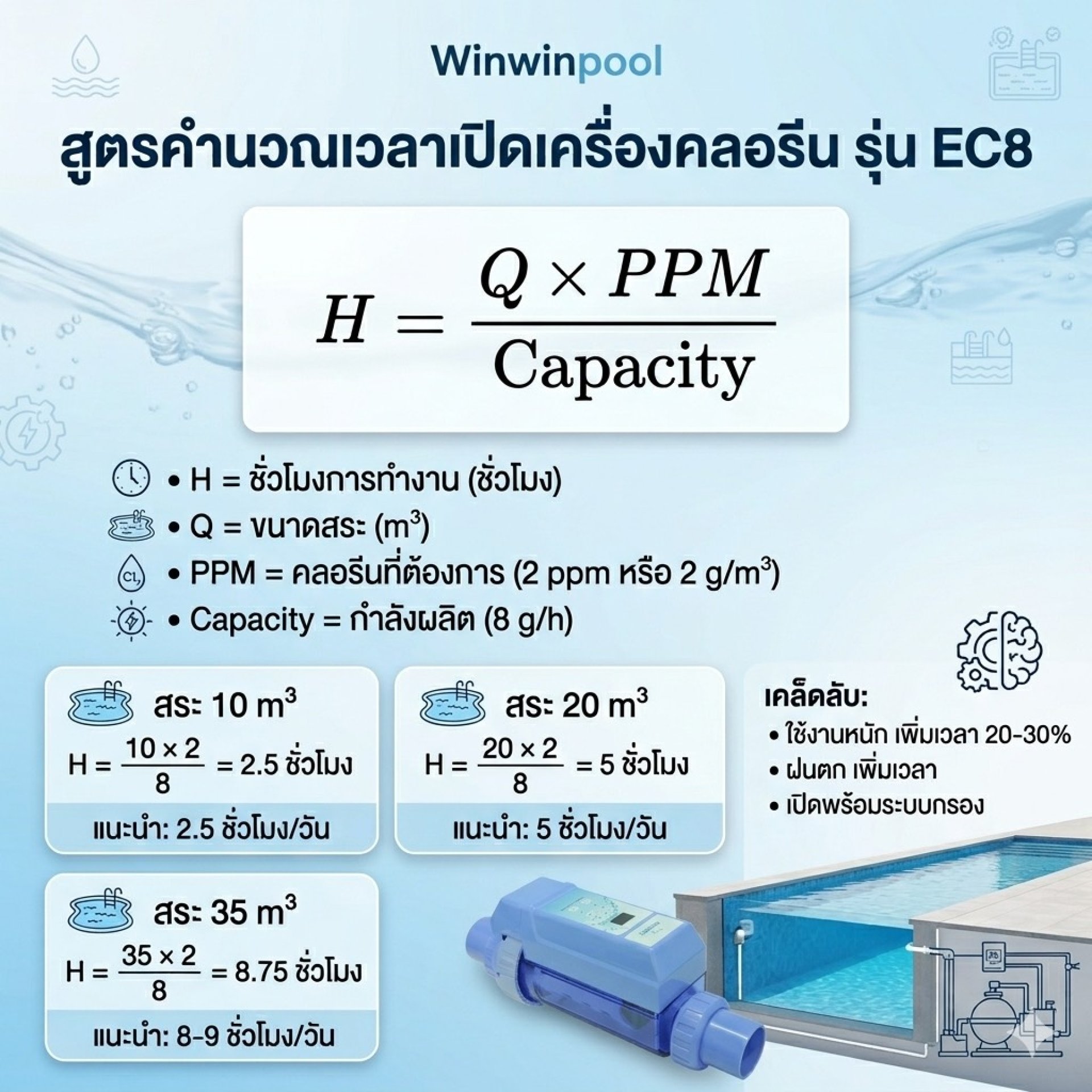
♂️ Salt Chlorinator Running Time Formula (EC8 Model)
One of the most common questions pool owners ask is:
“How many hours should I run my salt chlorinator to keep the water clean and safe?”

The answer depends on your pool size and the chlorine level required. In this guide, we’ll show you a simple formula and real examples using the EC8 salt chlorinator (8 g/h).


Simple Formula
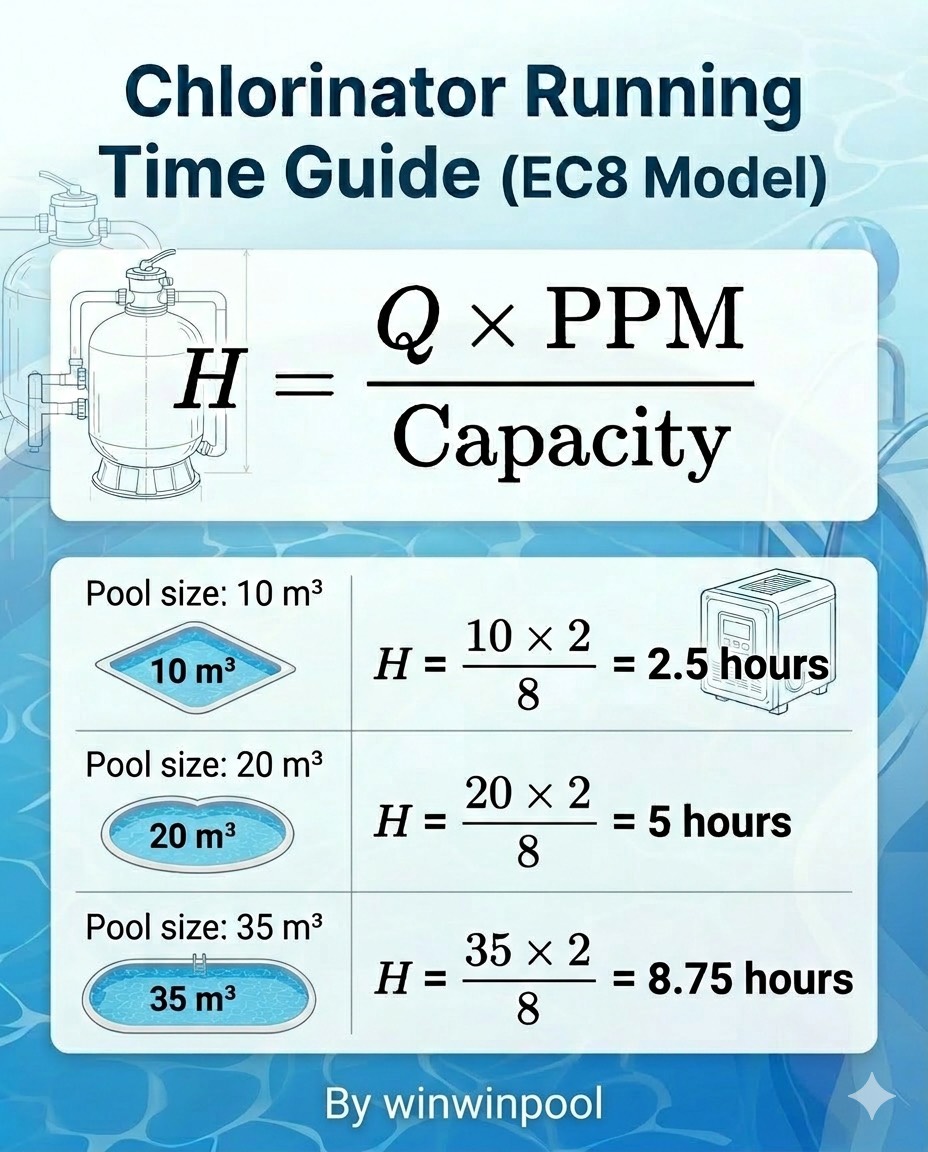
H = (Q × PPM) / Capacity


Variables Explained
H = Operating time (hours)
Q = Pool volume (m³)
PPM = Desired chlorine level (recommended 2 ppm or 2 g/m³)
Capacity = Chlorinator output (EC8 = 8 g/h)

Practical Examples (EC8 Model)
Pool Size: 10 m³
H = (10 × 2) / 8 = 2.5 hours
✅ Recommended: 2.5 hours per day


Pool Size: 20 m³
H = (20 × 2) / 8 = 5 hours
✅ Recommended: 5 hours per day


Pool Size: 35 m³
H = (35 × 2) / 8 = 8.75 hours
✅ Recommended: 8–9 hours per day


Expert Tips
Increase runtime by 20–30% during heavy pool usage
Extend runtime during rainy or cloudy weather
If water turns green, temporarily increase chlorine level (3–4 ppm)
Always run the chlorinator together with the filtration system

Conclusion
Using this formula allows you to:

Maintain stable chlorine levels
Keep your pool clear, clean, and safe
Avoid unnecessary chemical usage
Optimize energy consumption
Whether you have a small or large pool, setting the correct chlorinator runtime is key to professional-level pool care.


Why Choose EC8 from Winwinpool?
Stable chlorine production (8 g/h)
Energy-efficient and easy to use
Ideal for residential pools
Expert support and consultation available


Shopping EC Salt Chlorinator


Related Content
Leaving Home for 7-10 Days During the New Year How to Maintain Your Swimming Pool So Its Clear and Ready to Swim When You Return
The New Year holiday is a time when many families travel to other provinces or overseas, leaving their homes unoccupied for several days. For homeowners with swimming pools, this often leads to concerns that the water may turn green, develop unpleasant odors, or require costly cleaning and water replacement upon return. In reality, closing a swimming pool for 7–10 days is not difficult if the correct water care principles are applied. The key is proper water preparation before leaving, using the right chemicals to work in place of daily maintenance. This approach helps control algae growth, bacteria, and the accumulation of dirt during periods when the pool is not in use. This one-time, 10-day pool care method is designed for residential pools and can be applied to both homes without automatic control systems and those equipped with Smart Home or Smart App monitoring. It allows pool owners to reduce system operation while still maintaining stable water quality throughout the holiday period. When chemicals are selected correctly and adjusted according to pool size, homeowners can return from their trip to find clear, clean water. With minimal effort—such as vacuuming settled debris—the pool is ready for immediate use, eliminating the need for draining or refilling and ensuring a stress-free return home.
ปั๊มสระว่ายน้ำ ต่างจากปั๊มน้ำทั่วไปอย่างไร? อธิบายละเอียดทุกมิติ ปี 2026ปั๊มสระว่ายน้ำ ต่างจากปั๊มน้ำทั่วไปอย่างไร? อธิบายละเอียดทุกมิติ ปี 2026
This question may seem simple, but in reality pool pumps and general water pumps are completely different in terms of materials, design, safety standards, and operating methods. If a household water pump is used with a swimming pool, it may create serious risks for both pool users and the pump itself. This article explains every key difference in detail in a clear, practical way that you can apply in real life.
icon-messenger
This website uses cookies to enhance performance and provide you with a better user experience. You can read more details at: Privacy Policy and Cookies Policy