What do the colors of the wires mean?
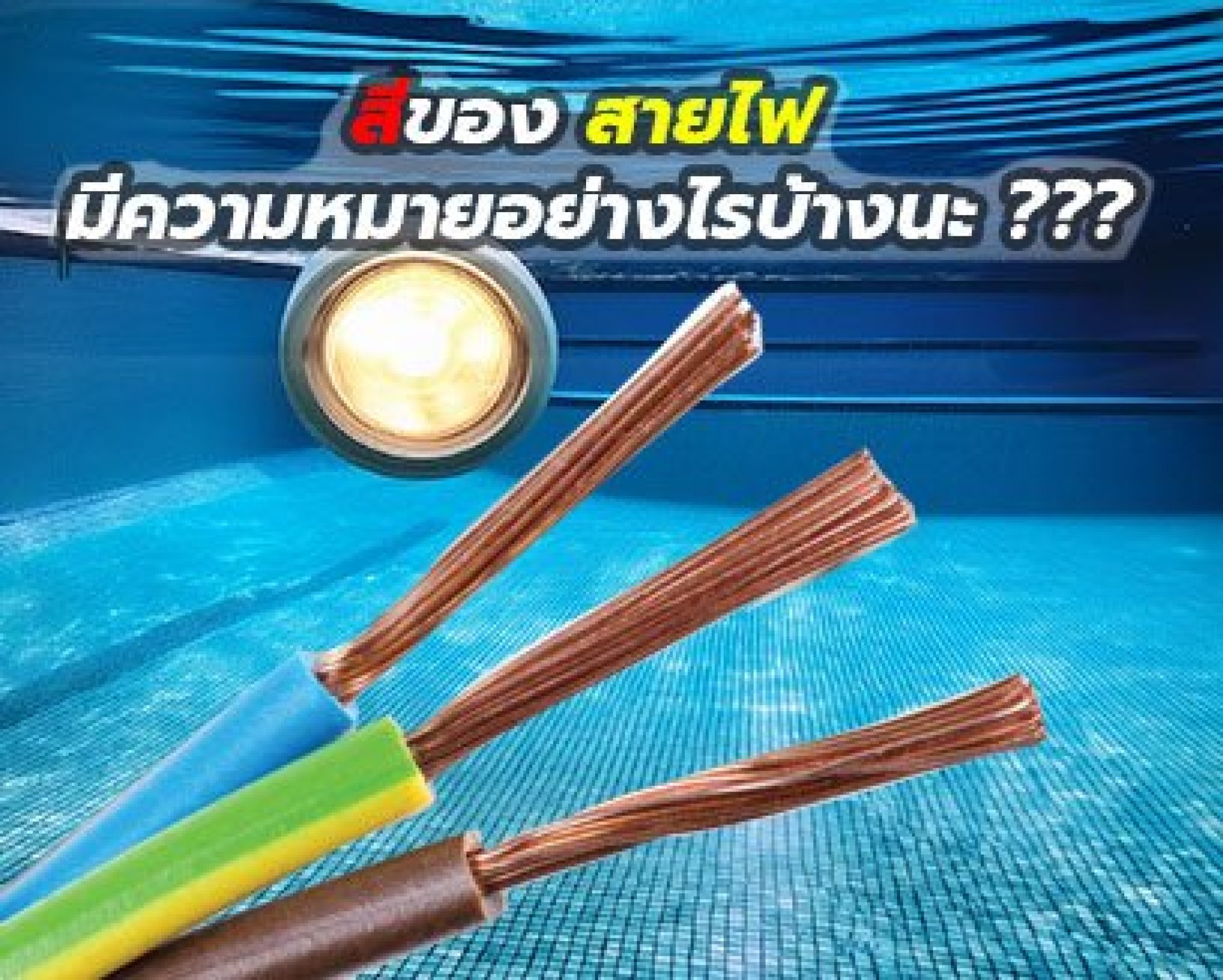
Electrical Wire Color Standards
Currently, electrical wire color standards have changed to use TIS 11-2553 (MOG), replacing the original standard TIS 11-2531. The reason for this change is that the Thai Industrial Standards Institute (TISI) aims for both industrial and household wiring in Thailand to meet international standards (IEC 60227 Standards).
Many people may wonder if each wire color has a specific meaning. This article will help resolve these doubts by explaining the meaning of each wire color for easier and safer application.
Black (Changed to Brown) refers to the hot wire or the wire carrying current to the entire circuit; usually supplies power to outlets or electrical switches.
Red (Changed to Black) refers to the second hot wire for large electrical appliances such as air conditioners, ovens, televisions, etc.
Blue and Yellow (Changed to Grey) refers to hot wires used with portable electrical devices utilizing general plugs, such as fans, lamps, vacuum cleaners, etc.
White or Grey (Changed to Blue) refers to the Neutral wire, which is essential for the safety of electrical appliances.
Green refers to the Ground wire, which helps prevent electric shock and protects against dangers from short circuits or fires.
According to Thai standards, wire colors can be classified as follows:

Wire Colors
Black (Changed to Brown) means L or L1, Positive Current Wire 1 (Live 1)
Red (Changed to Black) means L2, Positive Current Wire 2 (Live 2)
Blue (Changed to Grey) means L3, Positive Current Wire 3 (Live 3)
White or Grey (Changed to Blue) means N, Low Voltage Negative Potential (Neutral)
Green or Green/Yellow Stripe (Designated as Green/Yellow) means G, Ground Wire, helping prevent danger from short circuits or fires.
Differences between Single-Phase and 3-Phase Systems
Single-Phase System ( 220 V )
Live Wire (L) insulation is Brown
Neutral Wire (N) insulation is Blue
Ground Wire (G) insulation is Green with Yellow Stripe
3-Phase System ( 380 V )
Live Wire (L1) insulation is Brown
Live Wire (L2) insulation is Black
Live Wire (L3) insulation is Grey
Neutral Wire (N) insulation is Blue
Ground Wire (G) insulation is Green with Yellow Stripe