Share

การวัดค่า pH ในสระว่ายน้ำ winwinpool
Last updated: 6 May 2025
155 Views

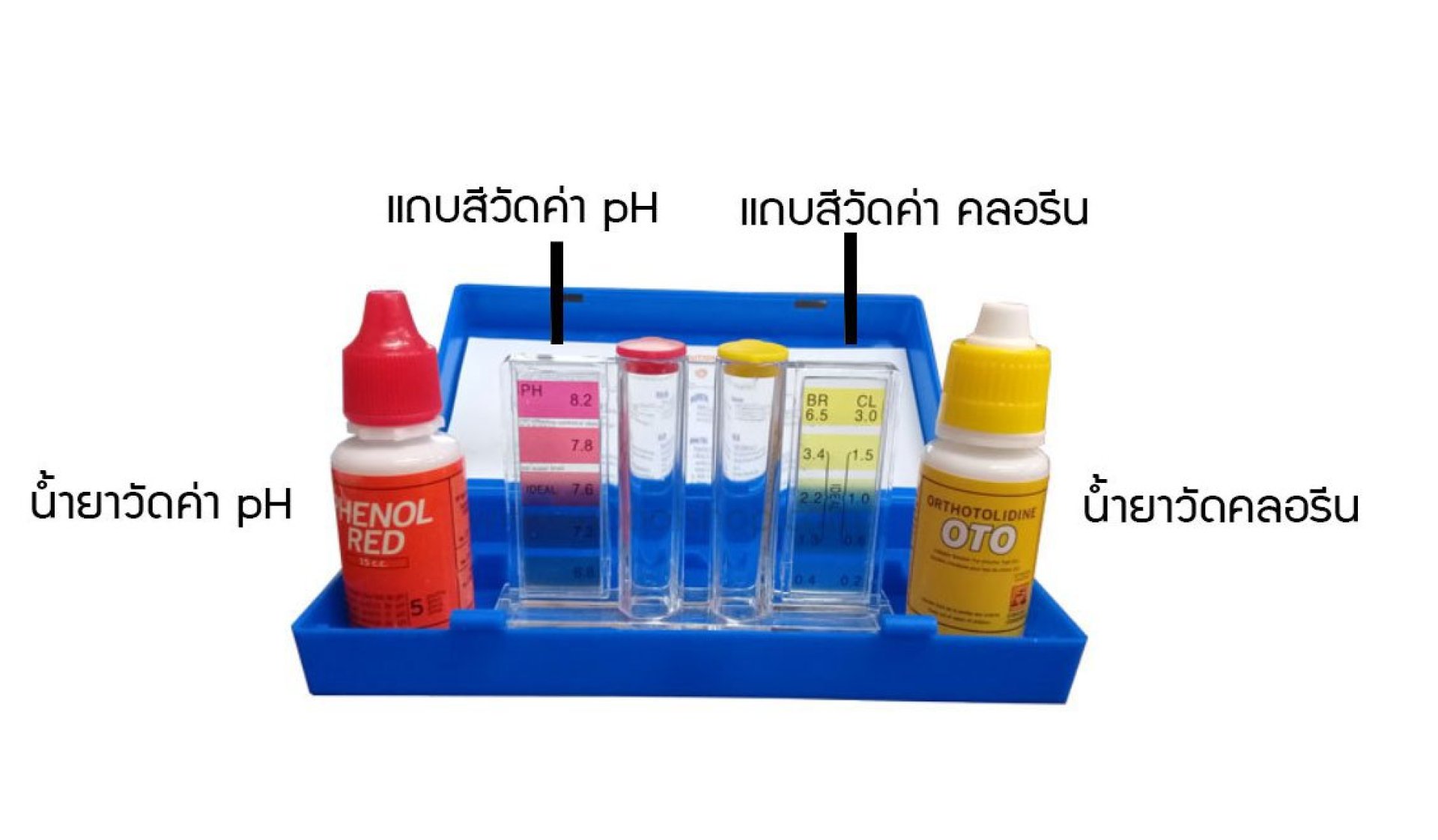
ชุดวัดน้ำยาทดสอบสภาพน้ำ  Basic PH & CL Test kit(15ml) 
สำหรับวัดค่าความเป็นกรด-ด่าง และ ค่า คลอรีน ในสระว่ายน้ำ

ภายในกล่อง ประกอบด้วย 
1. น้ำยาวัดค่า 2 ชนิด สีแดง และ สีขาวใส สำหรับทดสอบค่า PH และ CL ตามลำดับ 
2. กระบอกชุดทดสอบ 
3. คู่มือวิธีการใช้ชุดทดสอบ


วัดค่า CL (คลอรีน)    ในช่วง 0.2-3
วัดค่า PH (กรด-ด่าง) ในช่วง 6.8-8.2

หยด 4 หยดต่อการวัดคุณภาพ 1 ครั้ง

 pH ตํ่ากว่า 7.2     ค่าน้ำมีความเป็นกรด ใช้โซดาแอซ (Na2CO3)
pH สูงกว่า 7.6     ค่าน้ำมีความเป็นด่าง  ใช้กรดเกลือ (HCl) หรือ (NaHSO4)

ค่า pH มาตรฐานในสระว่ายน้ำ

ค่าคลอรีน CL มาตรฐานในสระว่ายน้ำ
สำหรับสระในบ้าน 1.0 PPM
สำหรับสระบริการ 1.5 – 2.0 PPM


ปรับค่า pH ในสระว่ายน้ำ

     มาตรฐานสำหรับสระว่ายน้ำทั่วไปควรจะมี pH = 7.5 หรืออยู่ระหว่าง 7.2 -7.6

ค้า pH ต่ำมาก (เป็นกรด)
       จะเป็นผลให้คลอรีนสลายตัวอย่างรวดเร็วและเกิดการกร่อนมากขึ้น
ทั้งยังทำให้แสบตาเมื่อเล่นน้ำ ถ้า pH สูงเกินไป ประสิทธิภาพของคลอรีนลดลง จะเกิดตะกอน
น้ำจะขุ่น และแสบตาเช่นกัน

โดยเฉพาะสระที่ใช้คลอรีนเป็นหลัก (TCCNA90)
            วิธีแก้ไข : ใช้โซดาแอซ ปริมาณ 1 กิโลกรัม ต่อ น้ำในสระ 100 ลบ.ม. (แต่ทั้งนี้ขึ้นอยู่กับค่าความเป็นกรดมากหรือเป็นกรดน้อย ถ้าค่าน้ำเป็นกรดมาก เช่น 6.0 – 6.8 ต้องเพิ่มปริมาณการใช้โซดาแอซ)

ค่า pH สูงกว่า 7.6 (เป็นด่าง) 
        จะเป็นผลให้ประสิทธิภาพของคลอรีนลดลงจะเกิดตะกอน น้ำจะขุ่น และแสบตาเช่นกันโดยเฉพาะสระที่ใช้เกลือเป็นหลัก
        วิธีแก้ไข : ใช้กรดเกลือ (HCl) หรือ (NaHSO4) ปริมาณ 1 ลิตร ต่อ น้ำในสระ 100 ลบ.ม. (แต่ทั้งนี้ขึ้นอยู่กับค่าความเป็นด่างมากหรือเป็นด่างน้อย
       ถ้าค่าน้ำเป็นด่างมาก เช่น 7.6 – 8.0 ต้องเพิ่มปริมาณการใช้กรดเกลือ)


ค่ามาตรฐานต่างๆของสระว่ายน้ำ


สระคลอรีน  สระว่ายน้ำที่อยู่อาศัย สระว่ายน้ำสาธารณะ
สระส่วนตัว / สระในบ้าน / Pool Villa สระคอนโด / สระโรงแรม
pH Level 7.2 – 7.6 7.2 – 7.6
CL Level 1.0 ppm 1.5 – 2.0 ppm
Total Alkalinity Level 80 – 150 ppm 80 – 150 ppm
Calcium Hardness 200 – 400 ppm 200 – 400 ppm

สระเกลือ สระว่ายน้ำที่อยู่อาศัย สระว่ายน้ำสาธารณะ
สระส่วนตัว / สระในบ้าน / Pool Villa สระคอนโด / สระโรงแรม
Salt Level
(*Depends on Salt Chlorinator Machine)
3500 – 4000 ppm 3500 – 4000 ppm
pH Level 7.2 – 7.6 7.2 – 7.6
CL Level 1.0 ppm 1.5 – 2.0 ppm
Total Alkalinity Level 80 – 150 ppm 80 – 150 ppm

สระเฟรชวอเตอร์ สระว่ายน้ำที่อยู่อาศัย สระว่ายน้ำสาธารณะ
สระส่วนตัว / สระในบ้าน / Pool Villa สระคอนโด / สระโรงแรม
Total Dissolved Solids (TDS) Level 800 – 1000 ppm 1000 – 1200 ppm
Salt Level 500 – 700 ppm 700 – 1000 ppm
Copper Level 0.2 – 0.5 ppm 0.2 – 0.5 ppm
pH Level 7.2 – 7.6 7.2 – 7.6
CL Level 0 – 0.5 ppm 0 – 0.5 ppm
Total Alkalinity Level 80 – 150 ppm 80 – 150 ppm
Calcium Hardness 150 – 250 ppm 150 – 250 ppm
Phosphates 0 – 0.2 ppm 0 – 0.2 ppm

Related Content
⭐ **WATERSTOP for Swimming Pool Construction Selection Guide + Specifications (Winwinpool Standard by Pool Size & Concrete Thickness)**
⭐ How to Choose the Right Waterstop for Swimming Pools Selecting the proper waterstop is essential for preventing leakage through concrete joints in swimming pool structures, including floor-to-wall joints, construction joints, and areas with structural movement such as expansion joints. Choosing the correct size and thickness helps ensure long-term waterproofing performance and extends the overall lifespan of the pool. The selection should always match the thickness of the pool wall or slab. For example, 6-inch waterstops are suitable for 15–20 cm concrete walls, while 8-inch models are recommended for 20–25 cm walls. Rib design and thickness are equally important: triple-rib models provide stronger anchorage and are ideal for high-pressure or movement-prone areas, whereas double-rib models suit general construction joints. Winwinpool classifies its waterstops into six types—Type A, AA, B, BB, C, and CC—allowing engineers, contractors, and homeowners to select the most appropriate model according to structural requirements and pool design standards.
Why Every Swimming Pool Needs 90% Chlorine?
Chlorine 90% is an essential primary sanitizer for every swimming pool, regardless of whether it uses a salt system, mineral system, ionizer, ozone, UV, or other health-oriented treatment systems. These systems function as secondary sanitizers and cannot kill bacteria as rapidly as chlorine. If the water becomes cloudy, develops an odor, or experiences heavy usage, chlorine should be added immediately to restore water quality. Maintain a minimum chlorine level of 0.5 ppm to protect swimmers from newly introduced contaminants. Keeping chlorine in stock ensures your pool remains safe at all times. Store chlorine in a dry area, tightly sealed, and away from moisture. If you need guidance on dosage or product selection, feel free to ask anytime.
Why You Should Never Use Exposed Aggregate (Washed Sand Finish) Inside a Swimming Pool
Why You Should Never Use Exposed Aggregate (Washed Sand Finish) Inside a Swimming Pool Using exposed aggregate or washed sand finish inside the pool is strongly discouraged because chlorine and pool chemicals gradually erode the surface, causing sand particles to loosen and detach. These particles are then carried by the water flow into the filtration system, where they often get stuck in the pump impeller, leading to wear, reduced performance, and costly pump damage. Additionally, exposed aggregate surfaces retain algae, are difficult to clean, and the rough texture may cause scratches or abrasions to swimmers. As the surface deteriorates, loose particles make the pool water cloudy and increase the frequency of maintenance, driving up long-term operating costs. ✅ Recommendation
icon-messenger
เว็บไซต์นี้มีการใช้งานคุกกี้ เพื่อเพิ่มประสิทธิภาพและประสบการณ์ที่ดีในการใช้งานเว็บไซต์ของท่าน ท่านสามารถอ่านรายละเอียดเพิ่มเติมได้ที่ Privacy Policy and Cookies Policy
Compare product
0/4
Remove all
Compare