ข้อแตกต่างการใช้งานระหว่าง กรดเกลือ 35% หรือ กรด Hydrocloric 35% กับ pH Minor และ Sodium Bisulfate
Last updated: 8 Mar 2025
822 Views
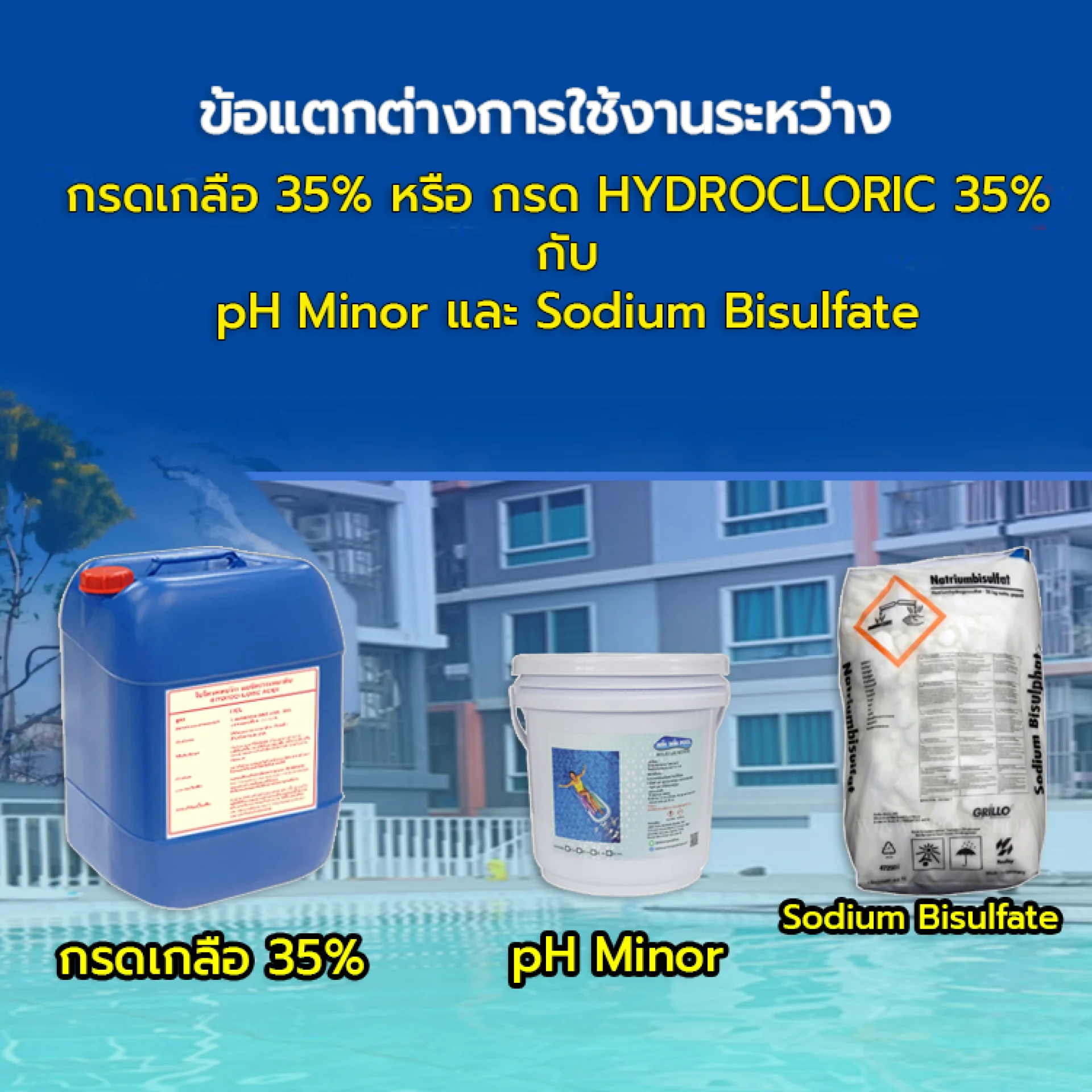
ข้อแตกต่างการใช้งานระหว่าง กรดเกลือ 35% หรือ กรด Hydrocloric 35% กับ pH Minor และ Sodium Bisulfate
| pH Minor/ Sodium Bisulfate | กรดเกลือ 35% (Hydrocloric 35%) | ||
| 1 | ความเข้มข้น | 93-98% | 35% |
| 2 | ปริมาณการใช้ | 1.5kg/น้ำในสระ 100 คิว ลดค่า pH = 0.2 |
1 ลิตร/ต่อน้ำในสระ 100 คิว ลดค่า pH=0.1-0.2 |
| 3 | ความปลอดภัย | มากกว่า | น้อยกว่า |
| 4 | การขนส่ง | ง่าย | ลำบาก บริษัทขนส่ง ไม่ค่อยรับส่ง |
| 5 | ราคา | แพงกว่า | ถูกกว่า |
| 6 | ความหลากหลายการใช้งาน | ไม่หลากหลาย | หลากหลายกว่า เช่น ขัดพื้นทำความสะอาด ปรับค่า pH/บำบัดน้ำ |
| 7 | การจัดเก็บ | ง่ายกว่า ที่ต้องเข้มงวดคือความชื้น ปิดฝาให้สนิททุกครั้งหลังใช้ |
ต้องจัดเก็บอย่างดี ห้ามวางถังซ้อนกัน ห้ามหล่นกระแทก อากาศต้องถ่ายเทสะดวก ห้ามจัดเก็บในห้องเครื่อง |
Related Content
What is a Variable Speed Pump? How does it work?
Comparing SS vs 2-Speed vs VSP in All Dimensions
Calculating Electricity Costs and Payback Period
Other Benefits of VSP People Often Overlook
What Type of Pool is VSP Suitable For?
Recommended Best Value VSPs in 2026
Frequently Asked Questions (FAQ)

The New Year holiday is a time when many families travel to other provinces or overseas, leaving their homes unoccupied for several days. For homeowners with swimming pools, this often leads to concerns that the water may turn green, develop unpleasant odors, or require costly cleaning and water replacement upon return.
In reality, closing a swimming pool for 7–10 days is not difficult if the correct water care principles are applied. The key is proper water preparation before leaving, using the right chemicals to work in place of daily maintenance. This approach helps control algae growth, bacteria, and the accumulation of dirt during periods when the pool is not in use.
This one-time, 10-day pool care method is designed for residential pools and can be applied to both homes without automatic control systems and those equipped with Smart Home or Smart App monitoring. It allows pool owners to reduce system operation while still maintaining stable water quality throughout the holiday period.
When chemicals are selected correctly and adjusted according to pool size, homeowners can return from their trip to find clear, clean water. With minimal effort—such as vacuuming settled debris—the pool is ready for immediate use, eliminating the need for draining or refilling and ensuring a stress-free return home.
If your Laswim EC Series salt chlorinator displays the EC code, it indicates a fault in the system detection circuit. The manual says to start by switching the unit off and on again. This guide explains what to do next, how to tell whether the code is coming back, and when to contact your dealer to repair or replace the controller.
