Standard water quality of swimming pools, part 1
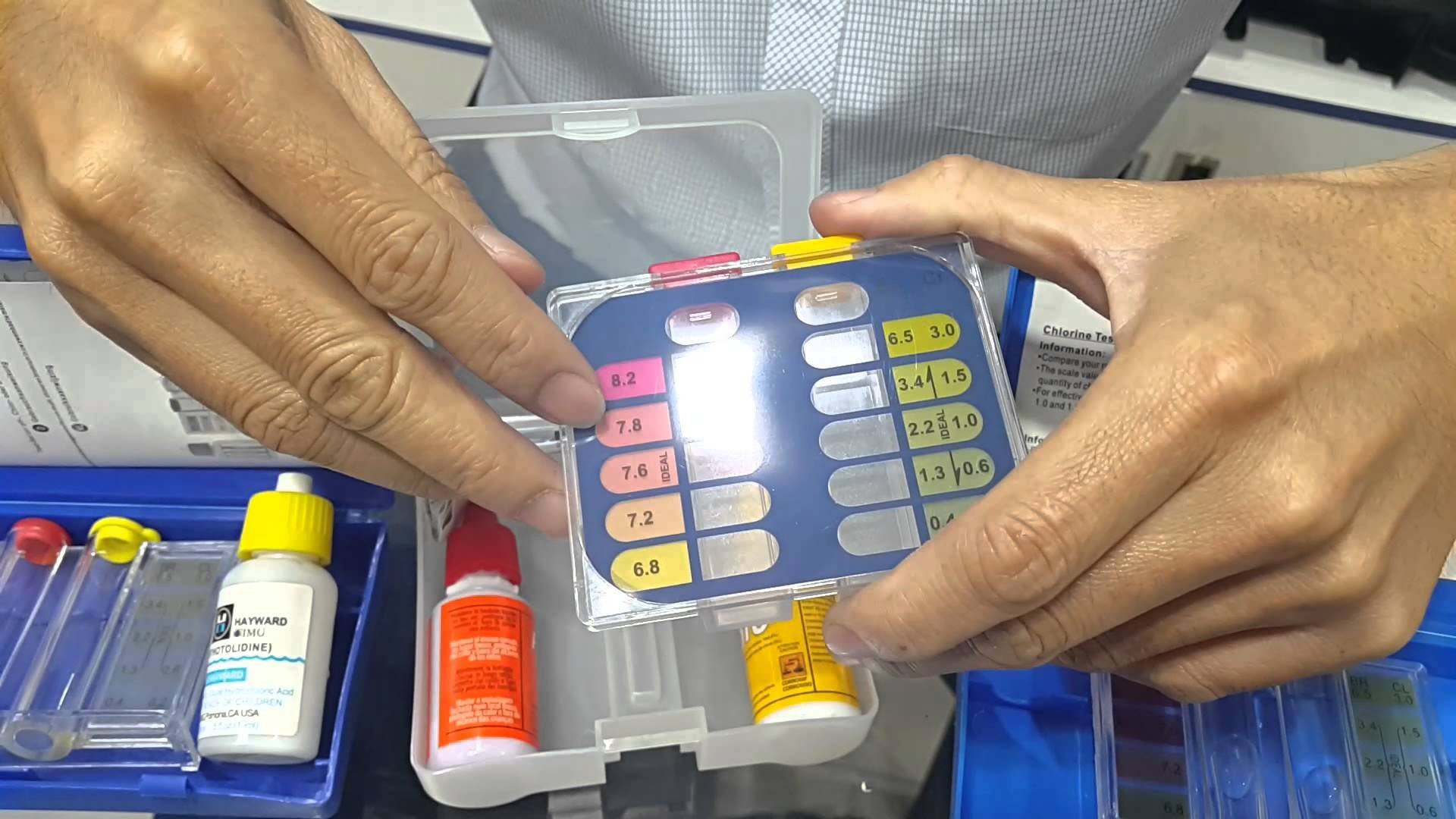
| Parameters to be Measured | Acceptable Values |
| - Free Chlorine (ppm) | 1.0 - 3.0 |
| - Total Chlorine (ppm) | - |
| - pH | 7.2 - 7.6 |
| - Total Alkalinity (ppm) (When using Liquid Chlorine, Calcium Hypochlorite, and Lithium Hypochlorite) | 80 - 100 |
| - Total Alkalinity (ppm) (When using Gas Chlorine, Dichlor, Trichlor, and Bromine Compounds) | 100 - 120 |
| - Total Dissolved Solids (ppm) | 1,000 - 2,000 |
| - Calcium Hardness (ppm) | 200 - 400 |
| - Cyanuric Acid (ppm) | 30 - 50 |
| Note: Standard values according to the National Spa and Pool Institute | |
Why do we need to follow these standards?
The reason to accept this is not merely due to the credibility of the institute. I have researched various textbooks, and the data is consistent.
Why must the Free Chlorine in the pool be 1.0-3.0 ppm?
1.This concentration level can kill various types of germs, eliminate algae/moss, and oxidize other contaminants rapidly.
2.It is not harmful to the skin and does not irritate the eyes.
3.Additionally, it allows for easier control of the pH level.
*** If we can consistently control Free Chlorine within this range, we can be initially confident that our pool is safe.
***However, most pools often have very high Free Chlorine levels because high chlorine makes it easy for the caretaker to maintain. They fear the pool will turn green or cloudy and ultimately get scolded by the boss. So, "Clear water first" is the golden rule... Now let's see...
Why must the pool pH be 7.2-7.6? Many people probably don't realize that pH has a huge impact.
1. If pH is lower than 1, Chlorine is in the gas form (Cl2).
2.If pH is in the range of 1 3.5, Chlorine is in the form of gas (Cl2) and HOCl.
3.If pH is in the range of 3.5 - 5.5, Chlorine is entirely in the form of HOCl.
4.If pH is in the range of 5.5 9, Chlorine is in the form of HOCl and OCl.
5.If pH is greater than 9, Chlorine is entirely in the form of OCl.
***The suitable pH range that allows the added chlorine to dissociate most efficiently and remain most stable in the water is 5.5 9.
***The Free Chlorine we measure is actually HOCl and OCl.
***So why isn't the pool pH standard set to 5.5 9? There are many reasons for this, which I will explain later. But to put it simply: 5.5 is still very acidic, affecting pool wall corrosion and dangerous to skin. Meanwhile, 9 is highly alkaline, which significantly reduces the efficiency of chlorine. As for Alkalinity, Hardness, and Cyanuric Acid, stay tuned for the next episode.